2025 W-2 Forms are now available in your GMS Connect employee portal here.

  • More than 60% of employees in the USA are paid by direct deposit, and the number will only continue to grow.

    Here’s why:

    Benefits for Employees

    1. Quick: No more waiting in line to deposit your check at the bank, or sending the paper check to your bank through the ATM or your phone app. Now you can be sure the money gets to where it needs to be. 
    2. Convenient: Employees don’t have to worry about being in the office to get paid. If they are on a vacation or out sick, they can be assured the deposit will be made. They can also control which account the paycheck goes into- maybe they choose to direct funds to a retirement savings plan or a checking or savings account. Bills can be paid immediately online as soon as a deposit is made.
    3. Green: Reduces a company’s carbon footprint, and offering online pay statements that are available 24/7 would also contribute to the green impact. 
     

    Direct deposit has benefits for employers and employees. Contact GMS about how our services can help save your small business money. Image: Money in a jar "Money” by Tax Credits is licensed under CC BY-ND 2.0

    [more]

    Benefits for Employers

    1. Cost Savings: Per-check amounts saved can add up quickly once the accounts are set up. You will wonder why you didn’t make the switch to direct deposit sooner!
    2. Peace of mind: Knowing your employees are getting paid on time and the money is going exactly where it needs to go. 

    If you own a small business but haven’t yet offered direct deposit, the only question left to ask yourself is why, with so many benefits, you haven’t switched yet!

  • A recent NIH funded study looked at medical expenditure bills that represented more than 8,303 emergency room visits and came up with two startling conclusions: 

    1. There are huge variations in prices.
      Bills sent out for sprained ankles ranged from $4 to $24,110. 
    2. Prices overall are really high.
      The average emergency room visit cost 40 percent more than an average month’s rent (or $1,233 as the average rent is now $871 per month). 
     Supplemental Insurance options avaliable from GMS. Image: Scrabble Series Insurance” by Chris Potter is licensed under CC BY-ND
     

    The Washington Post shared a chart that broke down the top 10 most common reasons for visiting the emergency room—designated by billing codes—and how much each one cost. Just a quick glance confirms the high prices and vast variations. A headache could cost $15 – or $17,797. 

    So how do you protect yourself (and your employees) from having to pay these radically high prices or extreme variations?  Education and Supplemental insurance may be an option. 

    Education

    The most important thing you can do, as an employer, is educate your employees on when / WHEN NOT to use the Emergency Room.  This education is not meant to discourage an employee from seeking medical attention, rather it is meant to educate that a sore throat is not the reason to see an ER doc.

    What is supplemental insurance?

    Supplemental insurance typically refers to supplemental health insurance, insurance policies that pay out cash directly to the person insured. Other types of supplemental insurance include accident & disability. 

    How supplemental insurance works

    Payment is often event-based. So the insurance pays the insured a set amount if you visit an emergency room, or for each night you spend in a hospital. In no case is the benefit sufficient to cover the cost. What it does is reimburse you for expenses your existing insurance does not cover. Supplemental insurance should NOT be your only form of insurance. 

    Why should I offer supplemental insurance to my employees?

    If you are looking for a way to attract and retain more talented employees, offering a competitive benefits package with supplemental insurance can convince them to join and remain part of the team. 

    GMS can help you build a better benefits package

    GMS can help you offer supplemental insurance plans and special benefits to your workforce. As one of the largest employers in Ohio, GMS has the buying power to secure great rates on supplemental insurance. That means through GMS you can gain access to high-quality supplemental insurance plans for low prices. 

    We offer a range of supplemental coverings, including: 

    • Life
    • Dental and supplemental dental
    • Accident, disability, and short-term disability
    • Cancer and special disease
    • Hospital indemnity and intensive care
    • Long-term care

    If you have questions about supplemental insurance for small businesses or how GMS could help your business, contact us today

  • Can you name the top three most frequently cited safety standards by Federal Occupational Safety & Health Administration (OSHA) in fiscal year 2013?

    If you answered fall protection, hazard communication, and scaffolding then you were correct! Out of 3,945 worker fatalities in private industry in calendar year 2012, 775 or 19.6% were in construction

    These statistics remind us that managing the risks involved in operating your business can be more than just paperwork. Employers are responsible for providing a safe and healthy workplace for their employees. One way to make sure the environment is safe is to conduct a safety audit.  

    How to perform a safety audit of your small business. Image “Baby with hard hat, 1959” by Seattle Municipal Archives is licensed CC BY 2.0

    What is a business safety audit?

    Safety audits are a tested and proven method to ensure that small businesses have the right programs in place to reduce incidents and risk to their workers. 

    The United States Department of Labor, Occupational Safety & Health Administration (OSHA) has a small business handbook on safety and management that outlines (in many, many details) how to create, develop, and implement your safety and health management plan. 

    If you take a look, and it seems complicated (maybe even overwhelming) we’re here for you. Contact GMS about our comprehensive risk management services, including OSHA compliance and safety training & inspection

    We can help you identify and avoid risks, where possible, and help you prepare for and respond to the unexpected.

    Small Business Safety Audit Scope

    Your self-inspection should cover safety and health issues in the following areas:

    • Processing, Receiving, Shipping and Storage
    • Building and Grounds Conditions
    • Housekeeping Program
    • Electricity
    • Lighting
    • Heating and Ventilation
    • Machinery
    • Personnel
    • Hand and Power Tools
    • Chemicals
    • Fire Prevention
    • Maintenance
    • PPE
    • Transportation
    • First Aid Program/Supplies
    • Evacuation Plan

    After reviewing the general issue areas, we pulled a few topics and a key question from the checklists to show what to look for in your own safety audits. Once you take a look at the full list you can see how detailed and involved a safety inspection can be.

    Examples of Self-Inspection Checklists 

    Employer Posting
    Are emergency telephone numbers posted where they can be readily found in case of emergency?

    Safety and Health Program
    Do you have an active safety and health program in operation that includes general safety and health program elements, as well as, the management of hazards specific to your work-site?

    Medical Services & First Aid
    Is there a hospital or clinic near your workplace or is there at least one employee on each shift currently qualified to render first aid?

    Fire Protection
    If you have a fire alarm system, is it certified, as required? Is it tested annually?

    Personal Protective Equipment and Clothing
    Are hard hats required, provided and worn where danger of falling objects exists?

    General Work Environment
    Are all worksites clean, sanitary and orderly?

    Exiting or Egress- Evacuation
    Are all exits marked with an exit sign and illuminated by a reliable light source? Are doors, passageways or stairways that look like but are not actually exits clearly marked as non-exits?

    And the list goes on. These lists are by no means all-inclusive and you should add to them or delete items that do not apply to your business. 

    Our ultimate goal is to help you provide your employees with a safe, healthy workplace.  Learn more about how GMS can protect your company from risk today.

    What do you think are the biggest safety concerns for small businesses? Let us know in the comments below.

  • How healthy are your employees? If you are a small business owner looking to save money on your healthcare, let’s hope they are all vegetarian non-smokers training for a marathon, right? 

    While that would be great, for your small business what matters more for your bottom line is the type of healthcare plan you provide. You have two choices: a fully insured plan or a self-insured plan. 

    TPAs and self-insurd plans can save your small business money. Image is a piggy bank with a $100 bill. “Health Care Cost” by Tax Credits licensed by CC BY 2.0

    Type of health insurance coverage matters

    Many small business owners today provide some form of health coverage through fully insured healthcare plans. However, with the Affordable Care Act, the prices on those premiums are on the rise. 

    In the face of these increases, you might want to consider a self-funded group plan, which can:

    1. Increase cash flow
    2. Limit your risk
    3. Keep employees happy

    How it works: With a self-insured policy from GMS you pay a specific amount into a claims fund each month. This contribution is what covers your employees under your plan. With a self-insured plan from GMS you only pay for what you need, and you can further protect yourself with stop-loss insurance so you won’t have unexpected expenses in the event of a major claim. 

    “When companies are self-insured, they assume most of the financial risk of providing health benefits to employees. Instead of paying premiums to insurers, they pay claims filed by employees and health care providers. To avoid huge losses, they often sign up for a special kind of “stop loss” insurance that protects them against very large or unexpected claims, say $50,000 or $100,000 a person.”


    Step 2: Third Party Administration

    Further earn your trust
    With our TPA services, we hold ourselves accountable for the policies we underwrite for your group. You will know that your employees are getting all the healthcare benefits promised.

    Lower your premiums
    Proper management of healthcare can lead to lower claims, lower claims leads to lower premiums which will make your cash flow higher.

    Centralize points of contact
    You no longer have to hire and pay a separate TPA. Now, you can work directly with GMS for all of your healthcare benefit needs.

    What is the benefit of having a third-party administrator manage my plan?

    When you have a third-party administrator, like Group Management Services, manage your self-insured plan you ensure your employees receive everything promised to them, and limit you from spending more money than anticipated. Plus, you have the choice to pick coverage that your group actually needs.

    More Related Links:

    Learn more about TPAs and self-funded plans by reading our previous posts below:


    What do you think about the health insurance plan options for small businesses? Would you make any changes or suggestions? Let us know your thoughts in the comments below.

  • It’s likely that as a small business, you don’t have a dedicated HR team. You may divide the tasks amongst a group of people, you may spend your nights and weekends making sure you’re keeping up to speed on the various HR regulations out there, or, even worse, you ignore it all together and just ‘wing’ HR management.

    If you find yourself spending more and more time dealing with HR functions and less and less time growing your business, you have a couple options: hire a professional employer organization (PEO) to handle the tasks for you, or hire someone dedicated to the management of your HR needs.

    Of course, we’d love it if you chose the option of hiring a PEO, but if you opt for hiring an HR manager, we’ve compiled a helpful list of 8 traits you should watch out for.

    Multitasking is an essential skill for successful HR managers “inbox” by khrawlings is licensed under CC BY 2.0.[more]

    8 Traits of Effective Small Business Human Resource Managers

    1. Strong Communication skills

    HR managers must have the ability to interact with a variety of audiences – from executives, all the way to job applicants. More importantly, effective HR managers must be able to listen and take into consideration everything from employee concerns and comments about the workplace to executive speeches about strategy. 

    2. Organized 

    HR managers need to be quick and organized in order to keep up with ever-changing regulations. Organized files, strong time management skills, and personal efficiency are key to managing a company’s HR responsibilities.

    3. Fair & Ethical

    Basic principles such as fairness and equality are the foundation for fair employment practices, and it takes a clear understanding of employment and labor laws to support compliance with laws that regulate the workplace. HR managers are also the keepers of highly confidential information. You must trust that they will handle confidential information appropriately and never divulge it to any unauthorized person.  

    4. Compassionate

    HR managers will have to deal with sensitive issues. Whether it’s employee termination, employee leave due to medical issues, or issues surrounding workplace harassment; the HR manager will need to possess compassion and empathy in order to effectively navigate these tricky situations for the company.

    5. Multitasker

    HR managers, especially at small businesses, often wear many hats and are placed in the position of recruiter, benefits administrator, payroll processor and more. Balancing each of these responsibilities is essential and can lead to stress in the workplace…

    6. Balance stress management

    While some stress is common, HR managers shouldn’t feel overwhelmed or burdened to the point that their productivity suffers. Having a plan to deal with stress will help maintain a healthy work-life balance. Some tips to reduce stress include: take a deep breath or get up  and walk around, adding plants to the office (lowers noise levels), reduce interruptions and keep spaces organized.  

    7. Comfortable dealing with grey areas

    HR managers deal with many issues that are “in the grey area”. Discrimination, harassment, “reasonable” accommodation are just a few of the areas that HR managers have to be able to act with incomplete and “best available” information. It’s also key to know when it’s time to seek the professional help of colleagues, attorneys, and other experts. 

    8. Skilled conflict manager

    You may have noticed that not everyone gets along when they work together. In order to be productive, people must be able to at least work together civilly, and HR has to find ways to make that happen. As an HR professional many new and uncharted problems will come your way so a keen problem-solving ability is necessary. 

    What traits make your HR manager a superhero? Or what do you look for in a super HR manager? Share with us in the comments below. 
  • Are you looking for a way to reduce administration costs for your small business? Have you considered how much time (and money) you would save if you didn’t have to prepare and process your payroll and payroll taxes?

    When you outsource payroll services, there are a number of benefits. The most essential for small businesses is that you can take the time you used to spend on payroll and devote it to building your business. 

    “Women operators at Midvale Company payroll machine in Time Office, April 29, 1949” by Kheel Center, Cornell University

    Benefits to Outsourcing Payroll Functions

    Greater business focus

    Your focus should be about growing your business and strengthening your core business strategy, not administrative details. 

    Reduced costs

    Using a professional employer organization (PEO) isn’t free, but many companies find significant cost savings by outsourcing their payroll. And, with a PEO like GMS, you can rest easier knowing that a team of payroll experts will protect you from risks like payroll tax penalties that directly impact your bottom line.

    More time

    If you’ve handled payroll or HR you understand how time consuming it can be. Calculating taxes, filing forms, and trying to keep up with different labor and tax laws could end up taking up large parts of your day. 

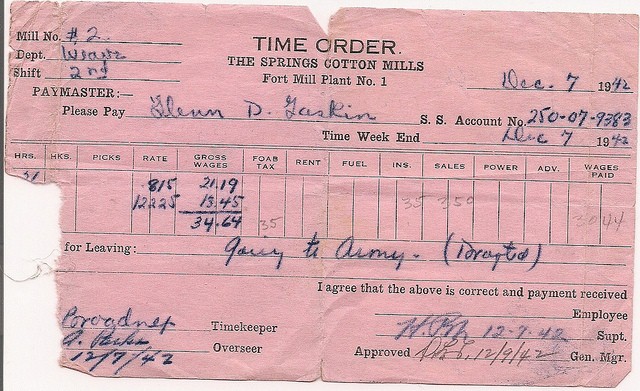
    Time order pink payroll record before leaving for WWII. Glenn Gaskins last payroll recod before entering WWII by wcgaskins59 is licensed under CC BY 2.0

    Maybe it’s time to consider a PEO

    As a professional employer organization, or PEO, our services and comprehensive solutions can provide options that will help effectively manage your payroll needs for you. Think about the time you will save by streamlining your system. 

    GMS’s payroll services include:

    • Full-service, Internet-based payroll processing
    • Payroll tax payment & filing
    • Time keeping systems
    • Workers comp calculations & filing
    • Electronic new hire reporting
    • Online payroll services available 24/7

    Read more about our what our team of payroll experts can provide for your payroll services

    Still have questions about our payroll services or how working with a PEO can save you money? We thought you might, so we added a Payroll Services FAQ section.

    Still not convinced? You don’t have to take our word for it, you can read the testimonials about our payroll & tax services

    What are your top payroll frustrations? Find yourself wishing you could spend your time at work doing other things than payroll administration? Let us know in the comments below.

  • According to a Wells Fargo study, 37% of people expect to work until they die. That’s an alarming number, but one that you can use to your advantage.

    Most people would rather spend their later years comfortably enjoying their retirement, so by offering a quality 401k plan, you give your business a step up in attracting and retaining quality employees.

    Avoid Financial Confusion: Educate Your Group

    Before we give you the key elements to a great 401k plan, it’s worth taking a moment to remind you that financial choices can be intimidating and confusing for many employees. One way you can help is by making an effort to ensure employees are educated about their choices. These resources will help make sure everyone is on the same page.


    What Employees Look for in a 401(k) plan. Image 401K by 401(k) 2013 is licensed under CC by 2.0

    What is a 401(k) Plan? [Infographic]  

    Guide to your 401(k): Everything you need to know about 401(k)s


    Retirement Guide


    A handy guide from CNN Money that shares:

    • Top things to know about 401(k)s
    • The virtues of a 401(k)
    • How to invest in a 401(k)
    • Early withdrawals and loans
    • Rollovers
    • Taking distributions in retirement

    7 Things Employees are Looking for in a Good 401(k) Plan

    1. Generous Employer Match

    According to findings from a 2013 survey by trade publication PlanSponsor.com, the common match amount increased to be $1 per $1 on the first 6% of employee deferrals, with 19% of employers reporting this formula, which is up from 10% in 2011. 
     
    Previously a match of $0.50 per $1 on the first 6% was the most popular.Increasing the amount employers are willing to contribute may help encourage those employees to save at more robust rates, and shows employees you care about investing in their future. 

    2. “Day One” Eligibility

    The PlanSponsor.com survey also showed that 76% of plans now allow workers to begin making pre-tax contributions immediately upon hire, which is up from 71% in 2011. In addition, 53% of plans have corresponding immediate eligibility for employer-matching contributions, while 50% of plans that offer a non-matching employer contribution allow immediate eligibility. Providing new hires with immediate eligibility helps ensure they don’t lose ground in terms of saving.  

    3. Immediate Vesting Schedule

    The best plans offer immediate vesting of employer contributions, according to the Bureau of Labor Statistics only 22% of employers offer immediate full vesting. Nearly half of those use a graded vesting schedule in which the employees’ right to company contributions increases gradually (say, 20% per year) until they are fully vested. 

    4. Low, Transparent Plan Fees

    Administrative fees cover record keeping, accounting, legal services, marketing and investor education services.  Typically employees will see these fees in a hard dollar amount on their statement.

    Investment fees cover expenses associated with managing the plan’s funds. Investment Managers usually report their performances net of these fees. Both types of fees are taken from your employees’ 401k assets.
     
    Finding plans with lower fees and educating your employees on what the fees are being applied to can help set your company’s 401k package apart from your competition.

    5. Investment Options-But Not Too Many

    Select only a handful of solid investment options. This can include individual mutual funds, asset allocation funds, and target-date funds, many of which automatically become more conservative as the employees approach retirement. 

    “Study after study shows the more investment choices a company gives their employees, the less likely they are to participate because they feel overwhelmed,” says Veronica Lee, Senior Vice President of Client Services with 401k Advisors in Aliso Viejo, Calif., an independent consulting firm. 

    6. Automatic Enrollment & Raises

    91% of plans offer automatic enrollment to new employees, unless they opt out, which helped boost participation rates in 401(k) plans nationwide. Especially among younger workers who may not feel an urgency to contribute. 

    Automatic escalation provisions, in which the amount of pretax money that employees contribute toward their 401(k) plan automatically increases annually, also shows that a company is looking out for their employees. 

    7. Give Employees Access to Expert Financial Resources

    Many employees have limited investment knowledge, so employers have significantly increased the availability of outside investment advisory services. Three out of four plan sponsors now offer access to such services, the most popular being one-on-one financial counseling (59%), online guidance (55%), managed accounts (52%) and online advice (46%) according to a survey from PlanSponsor.com.

    What else do you look for when considering the 401k plan you’d like to offer your employees? Let us know your thoughts in the comments below.

  • Did you know that January 17th has been named National Ditch Your Resolution Day? It has been reported this is the average day that most people give up on their healthy resolutions.  This is an important day for us in the” Wellness World”, but it is also the average day most people give up on all of their work and personal goals too. This is the time that most people who have been working so hard since the New Year become tired and simply give up. 

    So how does someone go from throwing out all of the “bad” food, habits, attitudes, spending a small fortune on “good” food, gym memberships, and changing work habits to giving up merely 17 days later?  Before they jump right in to making and attacking resolutions, they need to have a plan in place.

    As a wellness coordinator, I use these 3 basic rules for achieving health and fitness goals.  I feel these also can be used in all aspects of a person’s life.

    Set up alerts

    Set up alerts – Keep the momentum going!  Create an alert on your phone or computer to go off once a week with a motivating quote, a small goal to have been met, a video or story to read that will inspire you to keep working towards your goals. Fridays are “let loose nights” for me. – I look forward to enjoying a night without worrying about my food or activity calendar. I set an alert for every Saturday morning at 10 am with a “ get back at it “ reminder  so that I don’t blow all my hard work during the week over the weekend!

    Find an accountability partner

    This works in all aspects of your life!

    1. A partner or coach that you have regular workouts with to keep you accountable for showing up.
    2. A coworker or peer that you can go to with ideas and timelines so that someone other than yourself knows what and when you would like to accomplish a task. 
    3. A family member who you share personal goals with, like spending a certain amount of family time a week that can help you reach that goal.

    Set a “consequence”

    Unfortunately, many resolutions come and go quickly because there is no real consequence for quitting. Give yourself realistic consequences, write them down and share with your accountability partner or family member. for example:

    1. If I miss 2 workouts in a row with my partner, I will have to pay for their class, coffee, next session, etc.
    2. If I miss a work deadline that I set for myself, I will spend the next weekend getting caught up.
    3. If as a family we miss out on scheduled family time we will make it up in the following week to continue to bond.
    These 3 basic rules can help all of us stick to those resolutions that we were so excited for in the New Year. Changing one bad habit at a time can make great strides in helping us live a healthy life. Remember, goals and resolutions are an ongoing change that requires progress.
  • As a small business owner, you probably rely on the services of other organizations to accomplish a range of tasks, services and other duties. Your health insurance broker or policy provider is one you expect has your best interest in mind. The reality is, they may not, especially when it comes to premium and individual claim costs.

    With all your other responsibilities, you don’t have time to keep tabs on everything your health insurer does, however, there are some key questions you need to ask in order to effectively evaluate just how much they are working for you:

    What does the plan cover? 

    Many health insurance providers add in coverage for care you and your employees may never need. By providing an everything-but-the-kitchen-sink plan, insurers are able to increase the overall cost of the policy, meaning you and your employees are paying for benefits that don’t match their needs. Alternatively, using a third-party administrator (TPA) can help you secure group coverage that fits the needs of your employees, which can help you keep your healthcare-related costs down.

    How do you negotiate costs? 

    Healthcare is expensive. While some insurance companies claim to negotiate lower costs on your employees’ claims, they are not revealing the entire truth. The discounts are taken from the astronomically expensive costs doled out by the hospital or physician’s office. With a TPA and other services, there are many other ways to negotiate costs.   Multiple negotiation strategies keeps claims in line with more realistic pricing. 

    How do you audit medical bills? 

    Health insurance companies have little transparency when the final bill for medical care comes in for a claim. Generally, they do not ask for details related to costs or challenge prices. Instead, they pay their portion and turn the balance over to your employee. TPAs have the resources and knowledge to help your employee check each bill to ensure there is no double billing for equipment or health care services. They will challenge prices for services that are beyond “reasonable and customary,” substantially reducing patient bills and keeping your costs related to medical claims down.

    What type of customer service do you offer?

    With most insurance companies, you and your employees are a number in a huge system. You are at the mercy of the representative who takes your call when you have a question about your policy or have an issue with a claim. Navigating through red tape and other administrative obstacles can be frustrating and can lead to paying for unnecessary expenses. With a self-insured health plan managed by a TPA, each person’s needs can still be handled with personalized customer service to ensure issues are resolved and costs are minimized.

    Asking these questions of your health insurance carrier or broker can expose issues you may not have known existed. With a self-insured plan managed by a third-party administrator like GMS, you have more control over the type of insurance you need. Ultimately, this can cut your healthcare costs and enable you to provide better, more customized coverage for your employees and their dependents.

  • With today’s challenging economy, employees are often finding themselves searching for a better paying job.  A recent survey states that 47 percent of top-performers are looking for jobs. That statistic could be earth shattering for any business. “Whenever there’s a shift in talent, it’s the ones you want to keep that leave first.”

    Little do they know, they may be making more than they think.  Employees typically only see their take home pay and not the cost of the additional benefits you as the employer are offering.  

    As an employer, it is imperative to make sure your staff feels valued.  A great way to accomplish this is to show employees everything they are being offered besides what they put in the bank.  By presenting your employees with these facts, it will encourage them to stick around. Turnover rates can not only bring morale down, it is also a huge cost to you. With costs like unemployment taxes, job ad placements, background checks, training, and administrative costs during the process, it could cost you thousands of dollars each time an employee quits.   

    What you can do

    If only there was a way to show to employees their base pay plus all that your business offers.  That’s where GMS comes in.  We have the resources to create a Benefit Summary for each employee. These summaries will show your employees that their services are valued and they are getting more than just their take home pay.  

    “Our employees were unaware of how much we invest in them until they saw the Benefit Summaries. Many expressed that they felt valued as an employee and were happy to see the summary”

    – Jennifer H., Current GMS client

    What is included on a Benefit Summary?Benefit Summaries can include benefits including but not limited to:


    Health Insurance  Short-Term Disability  Retirement / 401k  Company Cars
    Dental Insurance  Bonuses  Vacation Time or Paid Time Off Tuition Reimbursement
     Vision Insurance  Cell Phone Reimbursement  Holiday Pay  
    Life Insurance  Long-Term Disability  Flex Time  


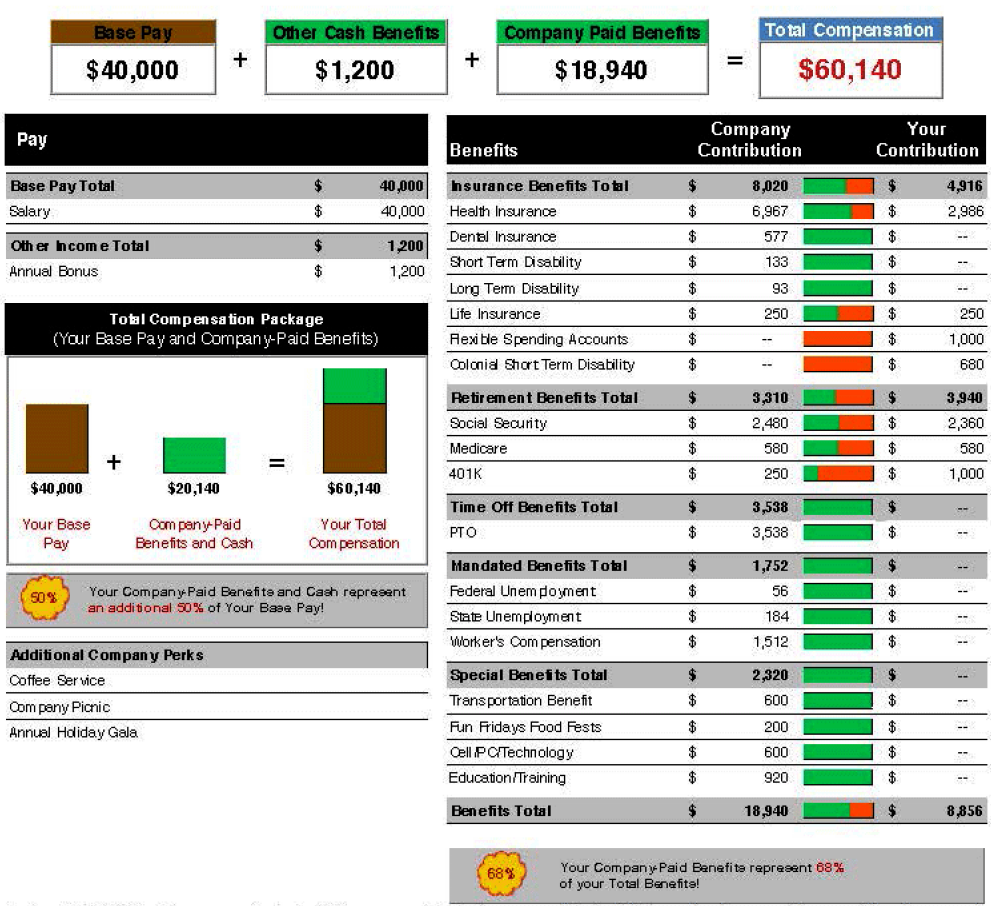
    If you offer any of the above benefits, we can obtain the information to create these summaries.  Benefit Summaries provides your employees with a snapshot of the above incentives.  Below is an example of what a Benefit Summary looks like. 


    Example Benefits Summary

    The Next Step

    By having GMS has your Professional Employer Organization, we have access to the data used to assemble these summaries. Our Account Managers will collect the data, generate the reports, and present them to you. If you’re ready to make a move, contact your Account Manager today and we can get started.

    If you are not currently using GMS, this is a great reason to consider. These summaries will help retain your employees and as a result, save you money.