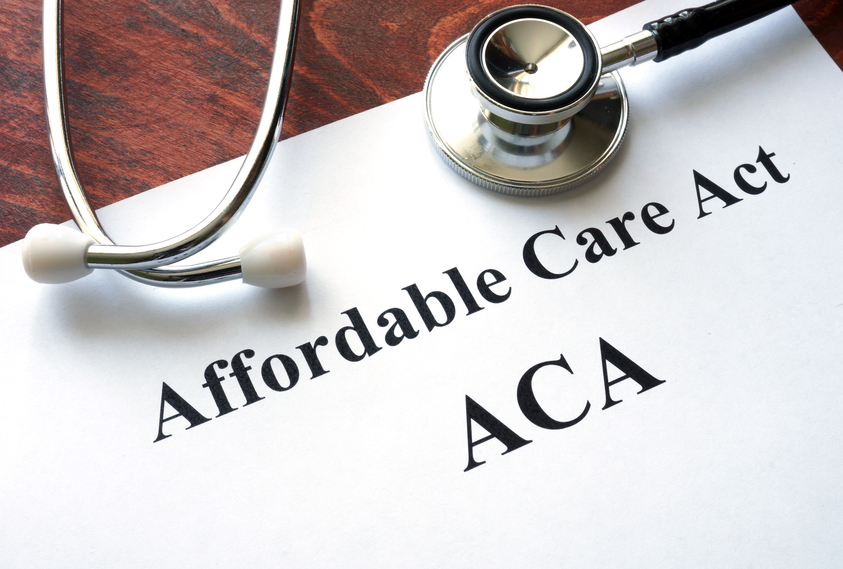
• Since the Affordable Care Act (ACA) passed in 2010, many business people and consumers have felt that their insurance costs were going to be going up. I’m sure they have never regretted being so right.

    The deadline looms for Ohio to submit insurance plan options to the federal government for the healthcare exchanges. As the deadline approaches, there have been more and more articles both locally and nationally that talk about projected increases in healthcare premiums.

    ACA Impact in Ohio

    In Ohio, Lt. Governor and Director of Insurance Mary Taylor has talked about small businesses seeing an increase between 50-85%. Some companies may even see an increase as large as 150%, she says. Granted, under the ACA, companies with older or sicker populations may see their premiums shrink by as much as 40%. However, those with populations which were once more desirable will see a huge increase. This is due to the law’s provision that rates must be based on a large community (community rating) with premiums being more equally spread over that community.

    Many news stories are being written about the “unintended consequences” of this law. Some of the ACA’s biggest supporters, like unions and members of President Obama’s party, are beginning to voice serious concerns about the law.

    Understanding the ACA

    Of course, the ACA is now the law of the land thanks to the Supreme Court’s ruling in June of 2012. That means that employers will have to make pretty tough decisions in the next few months as more of the law’s features begin taking effect. Many employers have been taking advantage of what has become a cottage industry of late, the Obamacare seminars. However, those have left many employers even more confused.

    Large companies are also confused, but have more resources to guide them through these waters. Small business owners must learn to navigate them alone, or do what others have done and begin conversations with a Professional Employer Organization (PEO) like GMS. A PEO can provide small businesses the same resources and infrastructure that a large company has without all of the associated costs.

    PEOs Can Help

    For further information on how a PEO can help you deal with the ACA, contact Tim Austin at taustin@groupmgmt.com or 330-659-0101.

    “Stethoscope and Piggy Bank,” ©401(K) 2012, used under Creative Commons Attribution-ShareAlike 2.0 Generic license.

  • President Obama’s administration has decided to delay enforcement of one of the key provisions in the Patient Protection and Affordable Care Act (PPACA): the Employer Mandate.

    Mark Mazur, Assistant Secretary for Tax Policy at the U.S. Department of the Treasury, posted on the White House’s Treasury blog on July 2. In this post, he announced that the administration has decided to postpone enforcement of the Employer Mandate portion of the Affordable Care Act by a full year.

    This was done because the administration has “heard concerns about the complexity of the requirements and the need for more time to implement them effectively. We recognize that the vast majority of businesses that will need to do this reporting already provide health insurance to their workers, and we want to make sure it is easy for others to do so.”

    According to the blog, this action accomplishes two goals: “First, it will allow us to consider ways to simplify the new reporting requirements consistent with the law. Second, it will provide time to adapt health coverage and reporting systems while employers are moving toward making health coverage affordable and accessible for their employees.”

    Employer Mandate Impact on Businesses

    Setting politics aside, I want to address the impact of this news on the business climate.

    People whose opinions I trust have shared that they think this law will be overturned. While many businesses would relish that, I was hesitant to believe that it would happen. Until I read this Wall Street journal editorial on July 3 that addresses the issue of the individual mandate. The article contents that the mandate cannot possibly survive this and be implemented on on 1/1/14.

    The reason, they cite, is in the name, Affordable Care Act. Individuals without coverage at work and those who earn lower income levels are supposed to be subsidized. This subsidizing would occur when buying insurance through exchanges.

    According to the WSJ editorial, “Individuals are only supposed to be eligible for ObamaCare’s subsidies if their employer doesn’t offer the right benefits. But how will the Treasury know who qualifies in 2014 if they lack the information that businesses are supposed to provide? Citizens must also pay the individual mandate-tax if they decline coverage from their employer. How will the Treasury verify these offers?

    In other words, who qualifies for the subsidies?

    When you look at these latest developments, plus the growing concerns that these Federal exchanges will not be ready to go by October of this year, the employer-sponsored healthcare landscape has become much more muddled.

    Do you think that the individual mandate will survive? Share your thoughts in the comments below.

  • The news channels are flooded with updates on the trials and tribulations of the Affordable Care Act’s website and accompanying registration process. Politics aside, the implementation of this piece of legislation could mean big changes and larger financial challenges for your health benefits plan.



    Most small business owners today are able to provide some form of health insurance coverage for their employees through large commercial healthcare plans. However, with the Affordable Care Act, these plans will come at a cost for business owners. In fact, Ohio businesses are expected to see a 71% increase in these premiums. 

    These high increases may force you to reduce or eliminate the health benefits you are able to extend to your employees, forcing them to buy insurance from the government’s healthcare marketplace.

    An Alternative to Government Healthcare

    The appeal that the Affordable Care Act has for many Americans is also one of its biggest challenges for those looking to enroll. Long wait times, sparse customer service and other registration obstacles will make it difficult, not to mention aggravating, for your employees to secure health benefits which match their needs.  

    Fortunately, you have another option for your company’s health benefits. You can implement a self-insured plan. Self-insured companies are responsible for their own medical costs, eliminating the need to subsidize the healthcare expenses of other insurance groups.  

    How Self-Insured Policies Work

    Self-insured healthcare provides plan flexibility, control and the potential for premium reductions for your business. Companies are responsible for contributing to a claims fund each month and that money is used to cover all employee medical expenses beyond their out-of-pocket costs. With a self-insured plan, you can still provide quality care to your employees and protect them from having to navigate through miles of government red tape.

    An essential component for any self-insured policy is known as the TPA, or third-party administrator. TPAs ensure that your employees are getting all the benefits promised to them in their insurance policy.  

    Who Has the Time?

    Of course, if you’re a small-to-medium sized company, you are probably thinking “Sounds great, but we don’t have the time or resources to manage self-insured policies ourselves.” 

    That’s where GMS comes in. Our services:

    • Let you focus on growing your business. We cover everything from eligibility to claims management and even customer service.
    • We’ll worry about the policy details. You worry about growing your business.
    • Save you money. We underwrite a custom policy for your group so you won’t pay for extra insurance that you don’t really need.
    • Limit your risk. We offer stop-loss insurance, which minimizes your exposure in the event of an unforeseen and major health claim.

    Learn more on how a self-insured plan administered by GMS can drastically reduce your health care costs, increase the cash flow of your business and ultimately provide better coverage for your employees and their dependents. Contact us today. 

    Image credit: 

    Creative Commons Image: Images_of_Money


  • Maneuvering through federal rules and tax regulations has never been an easy task, especially when you are simultaneously trying to grow your business. The Affordable Care Act makes those waters murkier to navigate with the various stages of implementation and rules for different sized companies. 

    As a small or medium sized business owner, there are some significant dates to keep in mind in 2014 as the Affordable Care Act begins to take effect. 


    January 2014

    • The Health Insurance Marketplace coverage begins January 1, 2014
    • The tax credit for small business will only be available if you buy coverage through the Small Business Health Options Program (SHOP) Exchange
    • The tax credit can be as much as 50% of your contribution toward health insurance premiums
    • Individuals who are eligible for employer-provided health coverage will not have to wait more than 90 days to begin coverage
    • The Transitional Reinsurance Program begins and runs through 2016. This program reimburses insurers in the individual insurance marketplaces for high claims costs.  The program is funded through fees which will be paid by employers (for self-insured plans) and insurers (for insured plans)
    • The maximum reward to employers using a health-contingent wellness program will increase from 20% to 30% of the cost of health coverage. Programs designed to prevent or reduce tobacco use could increase to as much as 50 %. 
    • Those with pre-existing conditions cannot be denied health coverage
    • Medicaid coverage is expanding in many states
    • Small businesses with fewer than 25 full-time employees making an average of about $50,000 a year or less may quality for employer health care tax credits
    • Individuals without health care will be charged a fee based on household income or on a per person basis


    March 2014

    • Open enrollment for health insurance marketplace ends


    October 2014

    • Open enrollment begins again


    If you are not yet sure how the changes brought on the Affordable Care Act will impact your business, or if you’re considering making major changes to your employees’ health plans (including eliminating it altogether) to combat rising group premiums, contact us today. We provide solutions that enable you to provide quality health insurance to your employees while limiting increases to your healthcare costs.

  • In January of this year, the Federal Government began enforcement of the Affordable Care Act (ACA) for those employers with 100 or more employees. Next year, those employers with 50 or more employees will have to begin compliance with the law as well.

    In a recent article on workforce.com, HR managers in large companies talked about the difficulties in compliance when it comes to calculating hours. What was troublesome for them was people who took unpaid leave under the Family Medical Leave Act (FMLA) or Re-employment Rights Act or even jury duty and how those hours would be calculated in determining healthcare eligibility. Because of that, “60 percent of large companies with more than 1,000 employees indicated that they aren’t prepared for penalty management under the ACA.”

    Every business needs to prepare for the effects of the Affordable Care Act.

    Photo Credit:  “Affordable Care Act” by Michael Havens is licensed under CC BY-ND 2.0

    If you’re under 100 employees, you may think this isn’t a concern of yours. Yet, as an employer with 50 or more employees, obviously you have to comply with the FMLA (you knew that, right?). You’re probably also a civic-minded person who doesn’t object to employees having to do jury duty. These are things that need to be factored into your equation. If a large company with the resources and manpower to address these things is struggling, what is the likelihood of your business struggling?

    On top of that, you will need to have Finance involved to test for the accuracy of the data that you’ll be using to report next year. That calls for a level of communication between benefits and payroll that you may never have had to address before.

    That’s where a Professional Employer Organization (PEO) like Group Management Services (GMS) can help. If you want to see how GMS has been helping employers brace for the coming effects of the ACA and how they can help you, give us a call at 888-823-2084 or contact us online.

  • In January of 2016, the Affordable Care Act (ACA) will begin to directly impact businesses with between 50-99 employees. While health insurance rates have been impacting business owners since the start of the ACA several years ago, those companies with 50-99 employees haven’t had to offer healthcare or face a fine. That’s changing in a couple of months.

    The interesting thing about the ACA is that the very people it is supposed to help, low income workers, seem to be the ones least interested getting their healthcare, even when it’s offered by their employers.

    Offering coverage and the Affordable Care Act.

    How the Affordable Care Act Affect Low-income Workers

    In a recent article in the New York Times, Billy Sewell, the owner of 26 Golden Corral restaurants talked about the problems he has had getting his employees to take on his health insurance.

    When this law was first passed, many businesses began scaling back their employees’ hours to get them below the 30-hour workweek threshold requiring coverage. However, others chose to offer it to their employees for a variety of reasons (retain and attract good employees, take care of their company’s “family” of employees, etc.). What they were finding was that different people had different definitions of “affordable.”

    According to the article, Sewell offered his Golden Corral employees coverage through a plan that was only offered to salaried management before. Even though he was going to pay 65% of the employees’ healthcare premiums, he found few takers. It turns out that people who work primarily on tips weren’t willing to even pay the $140 per month for a high deductible health insurance plan.

    This is a problem that isn’t unique to the restaurant industry. There are many industries with employees working at minimum wage or slightly better that either can’t afford the coverage or don’t want it. What’s an employer to do to protect himself/herself from fines tied to the law? There are some safe harbors built into the law allowing for spouse’s income, etc. However, how does a business owner know what the laws are and how they apply to them?

    How Group Management Services Can Help

    If you’re offering healthcare, looking to expand who you cover or are looking to begin offering it, you should talk to some people. If you have a broker, reach out to them or you can do what more and more businesses are doing and speak with a professional employer organization like GMS. By tying together payroll, human resources, and benefits, a PEO may be able to provide you multiple options that you may not be able to get on your own.

    Contact us today to see how partnering with a PEO can provide you and your business with beneficial options.

  • As the Affordable Care Act heads into its third full year of existence (some provisions started before 2014), there doesn’t seem to be any more clarity for business owners and what they should do. If you have 50 or more employees, do you offer it? Do you succumb to the ever increasing costs and drop coverage and pay the penalty? If you’re under 50 employees, should you drop it and get out while you can? Are there any more changes coming down the road that you need to know about? Well, a recent article in New England Journal of Medicine may help shed a little light on things for you.

    GMS provides Affordable Care Act guidance for businesses.

    A New Twist in ACA Financial Consideration

    Like many people, I wondered about the financial advantages of paying high health insurance premiums when you could pay a fine of $2K. Aside from the possibility of not attracting or retaining quality employees due to a lack of benefits, that would make all the financial sense in the world, right? Yet when reading through the New England Journal of Medicine article, a financial consideration I hadn’t thought of was brought up.

    “The ‘simple math’ that a $2,000 fine is less than the $10,000 average per-employee cost of coverage is complicated by the tax deductibility of employers’ health care contributions. The increase in non–tax-deductible salaries that would be needed to keep projected health care costs from damaging employee recruitment and retention efforts exceeds the savings an employer could expect from dropping health care coverage.”

    Now the cynics among us are also thinking that if the history of inefficient government bureaucracies continues, then the penalties are sure to go up in the future. Those factors, and the popularity of CDHPs (Consumer-Directed High-Deductible Plans) helping control health care cost increases, have kept employers from dropping coverages en masse.

    ACA Guidance from the Experts

    If you’re under 50 employees, my suggestion is that you don’t get too comfortable being exempt. The majority of businesses in this country are small businesses. As the cost of the government-run exchanges continues to go up (more than half of the federally-run exchanges have shut down for insolvency), the pressure will increase to lower the threshold for mandating employer sponsored coverage.

    If you’re looking for guidance or help, or need to think about offering a comprehensive benefits package of your own, you can reach out to a Professional Employer Organization like GMS for advice on what the best plan of action would be for your business. Contact GMS today to talk to one of our experts about ACA guidance.

  • In addition to an upcoming national election, we are now quickly approaching open enrollment season for the Affordable Care Act. This is the time of year when people can  apply for healthcare coverage through the exchanges and look for income-based subsidies to help them offset some of their insurance costs.

    It’s also the time when employees who don’t feel they have an adequate or affordable employer-sponsored health plan may  seek out coverage and subsidies through the exchanges. While an employer may be tempted to find relief in one less person to cover (and pay for), there may be some repercussions.

    Image of an ACA notice for an applicable large employer.

    ACA Notices

    According to a recent article in the National Law Review, employers are starting to receive notices that:

    • An employee has been determined to be eligible for premium tax credits or cost-sharing reductions to help pay for Marketplace coverage and has enrolled in Marketplace coverage
    • The employer may have to pay an employer shared responsibility payment (i.e., a penalty) to the Internal Revenue Service (IRS)
    • The employer has the right to appeal the determination

    These notices are typically addressed to the “Benefits Manager” and require action on their part. An employer may appeal by completing and submitting the Employer Appeal Request Form available at www.healthcare.gov or by sending a letter that includes the information requested on the form. The employer can then designate a secondary contact (i.e. an attorney) as the employer’s representative when dealing with the appeal.

    In 2016, only employers that fall into the 50-plus employee range (Applicable Large Employer or ALE) are subject to the penalties.

    Partner with a PEO to Avoid ACA Ramifications

    If you have received one of these and are confused and concerned about the ramifications, it appears you have reason to be. Employer shared responsibility penalties can be substantial if it is determined that an employee is eligible under the ACA. If you are an ALE or on the threshold of becoming one, you should consult with your attorney or explore other options.  

    One of those other options would be to consider working with a Professional Employer Organization like GMS. Contact us today and let our HR experts help you clear your ACA anxiety, by assuring you are compliant with all guidelines.  

  • As a sales rep for a Professional Employer Organization, I have spent the last four years talking with business owners who were worried about the impact of the Affordable Care Act on their businesses and employees. In many cases, I helped them find a cost-effective solution that helped them gain control of one of their most uncontrollable costs. Sometimes, I didn’t. Sometimes, the uncertainty of the previous two election cycles caused them to freeze up, maintain their status quo and hope for the best.

    Now, we are about to embark on the Donald Trump era. For many, this is a sign that the ACA is going away and they can go back to things as they were. Perhaps so, but were things all that great before?  

    The reality is that it’s impossible to predict with any certainty what will happen in the next 12 months, let alone the next two years. A recent article on Smart Business’ website does have some thoughts on it that I would like to share and expand on.

    Image of the ACA. Learn about how the ACA may affect businesses in 2017.

    The Future of the ACA

    As the article states, the Senate would require 60 votes to repeal the ACA. If everyone votes strict party lines, there aren’t enough votes to make that happen. Still the Republicans have other tactics at their disposal, particularly budget reconciliation, the same tactic that was used to pass it in the first place. This would only impact the parts that deal with revenue and expenditures (i.e., individual mandates, premium tax credits, penalty taxes, etc.). It would have to leave many parts of the law in place. Some of those are very popular components like covering pre-existing conditions, extending children’s stays on parent’s policies until the age of 26, and prohibition on annual and lifetime limits on essential coverages.

    Due to the political nature of this legislation, anything happening soon is unrealistic. There are too many people that are already on some sort of ACA plan, meaning they’re committed to this for at least a year. Anything happening long-term would most likely be a hybrid program at best.

    If you’re having trouble wrapping your head around all of this or just want to look at exploring some innovative options, a PEO like GMS can help you explore some great alternatives. Contact us today to learn more.

  • As a business owner, you get to make the rules in  your own company. However, there are still plenty of regulations and laws that can impact your business.

    It can be difficult for owners to keep track of every single rule and avoid non-compliance costs when they’re  busy, well, running a business. That’s why it can pay to invest in human resource outsourcing through a Professional Employer Organization. A PEO can help your business stay in line with complicated regulations to help you keep your HR functions in order. Here are areas  where a PEO can help save you some money.

    Image of compliance needs for a business. Learn how human resorce outsourcing with a PEO can help with compliance.

    Four Areas Where Non-compliance Can Cost Businesses

    Workplace Safety

    OSHA takes safety very seriously and can dole out some significant fines for non-compliance. According to the OSHA Penalties list updated Jan. 13, 2017, serious violations can cost a business a whopping $12,675 per violation. It’s 10 times that amount for willful or repeated penalties.

    Workplace inspections and guidance on compliance can do more than just avoid costly OSHA fines. They can make your workplace safer and minimize risk for workplace accidents. 

    Hiring

    Hiring employees can be a costly experience if you aren’t compliant with appropriate policies and practices. There are several laws enforced by the Equal Employment Opportunity Commission that can trip up companies that aren’t careful, leading to lawsuits from disgruntled applicants over improper job applications, discrimination, or other issues.

    Healthcare

    Even with the current political administration in power, businesses should still plan for Affordable Care Act  compliance. As our own Andrew Szczesniak wrote earlier this year about the future of the ACA , “it’s impossible to predict with any certainty what will happen in the next 12 months, let alone the next two years.”

    With many people committed to the ACA through at least 2017, businesses still need to make sure that they stay compliant. Failure to offer coverage under current legislation could end up costing a company thousands of dollars  each month, depending on the number of employees at your company and how/if you offered employees coverage. The specifics can get complicated, so The Henry J. Kaiser Family Foundation has an easy chart that you can follow to see where you fall.

    Payroll

    Businesses have to deal with tax liabilities and responsibilities. If you don’t stay compliant, you could end up having to cut a few more checks as a penalty. 

    Bloomberg reported back in 2014 that “the IRS issued 6.8 million penalties totaling $4.5 billion” for business in the U.S. over the course of a year. That’s a lot of lost cash that could be avoided by making sure your business is compliant with tax liabilities and responsibilities.

    Stay Compliant through Changing Regulations

    It can be tricky enough for some businesses to stay compliant with every rule and regulation. It gets even harder when laws are created or updated. 

    The ACA is a great example of how changing legislation can create questions about what you need to do to keep your business compliant and avoid costly penalties. A PEO has a dedicated team of HR specialists who can help you stay up to date on the legislation and regulations that may affect your business. 

    With a PEO, you don’t have to toil away for long nights trying to make sense of every little detail. PEO experts know how to do that so your business is safer and stronger in the long run. Contact us today to talk to one of our experts about how a PEO can help your business with compliance.