2025 W-2 Forms are now available in your GMS Connect employee portal here.

  • Conducting an employee review is one of the most disliked tasks among managers and business owners. However, these evaluation opportunities are critical in retaining good employees, motivating employees to remain productive and maintaining a good relationship with your staff. 

    Before you sit down to complete your laundry list of assessment points, consider the following tips to help your employee reviews be more effective than ever:

    Listen

    While it is tempting to run down the list of “grades” the employee has earned throughout the year, engaging in an open discussion is the best form of evaluation. Instead of leading with the company form, ask your employee about their performance throughout the year, the problems and challenges they have encountered and how they overcame those obstacles. Carefully listen to your employee to help solve their work-related problems and create goals for the coming year. 

    Leave the money out…for now

    Conduct separate meetings for performance and compensation discussions. If performance is discussed with the yearly bonus or raise “elephant in the room,” your employee may be more defensive about any constructive criticism you have to offer. Instead of using the meeting as a compensation conversation, structure your review as a developmental strategy session. This shift in focus allows you and your employee to talk about what steps can be taken to mutually improve while trying to achieve company and personal goals. Set a separate day to go over compensation or bonus topics to allow you both to focus on, and get the most value from, the performance review. 

    Honesty

    Even though it sounds like common sense, many employers struggle with being straightforward with their staff during evaluations. Whether it’s done to avoid confrontation or an uncomfortable conversation, not being completely honest will prevent your employee from making necessary improvements and could make firing the employee in the future difficult. When tackling an area that needs to be improved by the employee, focus on the issue, not the person. By providing this type of feedback, you can effectively address areas of weakness while building a strategy for improved performance. 

    Provide guidance and set goals

    As mentioned above, it is critical to lay out some measurement of performance for overall productivity measurement and future reviews. As an employer, you are the coach of your organization. Look closely at each employee and define a work strategy that capitalizes on their strengths while defining opportunities to build upon their areas of weakness. Having mutual goals for both you and your employee help create a more productive and open environment. 
  • “Keeping the plates spinning,” is an idiom many small businesses use to describe the way they manage their human resource responsibilities. Some outsource HR functions to various companies while some tasks are handled by an in-house team member who has many other job duties

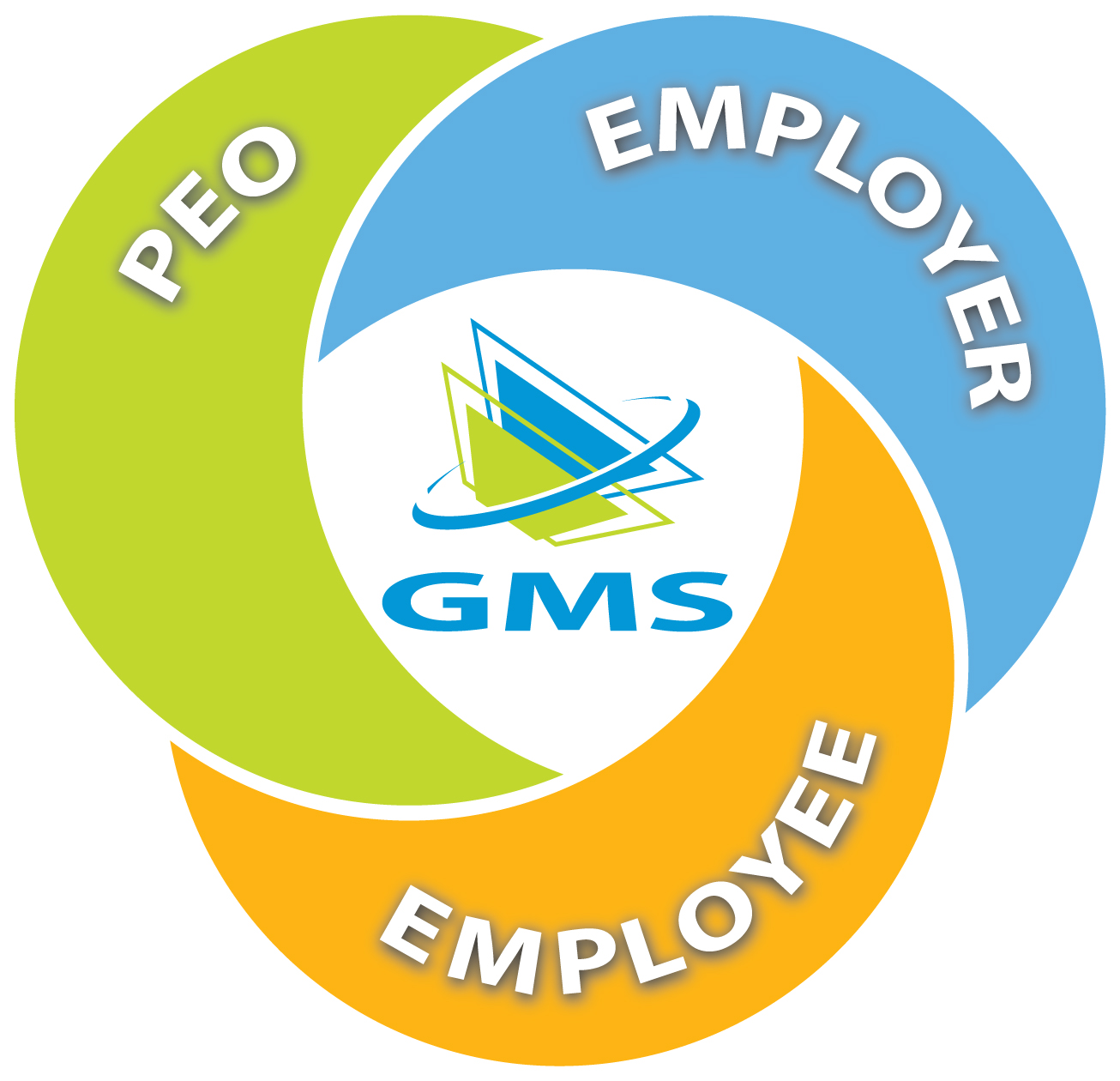
    There’s no need to juggle between outsourcing tasks to multiple companies and attempting to have them work together on your behalf. Professional employee organizations, or PEOs, can help minimize the stress, time and costly resources you spend administering your HR functions by managing: 


    Human resources, including employee recruiting and training, performance management, HR audits and more. GMS provides an online system solution to coordinate communication and centralize information. 

    Payroll, by assuming all responsibility and liability for your business taxes. With GMS, you and your employees have constant access to the online payroll service in our secure and easy-to-use web-based system. 

    Competitive benefits at a reduced rate. Attract and retain talented employees with health insurance, 401(k) plans, and other benefits at the rate large companies receive. With more than 20,000 workers, GMS can achieve great economy of scale when purchasing benefits coverage. 

    Risk and liability to prevent and effectively handle problems when they do arise. The risk management experts at GMS can manage Workers’ Compensation programs, unemployment claims, and OSHA safety regulations. 

    When you outsource your administrative duties to a PEO like GMS, your small-to medium-sized businesses can experience the benefits of a big business HR department. You can offer the very best benefits to your employees while saving your company time and money.

    Think you could benefit from a PEO provider? So do we. Let’s talk.

  • For small-or medium-sized businesses, worker’s compensation can be extremely costly. You invest a lot of the time, money and resources into claims management to ensure your business stays compliant and your workers are protected. With your limited resources, there are steps you can take to minimize your risks and reduce your worker’s compensation costs.

    1. Early return to work: Offer part time or alternative work options to get your employee back to work as soon as possible. The longer your worker is absent, the longer the insurance company has to pay his or her benefits which can increase the cost of your premiums.
    2. Education: Ensure your employees know how to operate all equipment and practice safe working habits around all machinery. Conduct random checks to keep employees fresh on operational protocol and establish an open-door policy for questions and concerns.
    3. Injury response: In the case of an accident, make sure you and your employees are aware of the company procedures to follow when responding to an injury. Injured workers should know where to receive medical care, procedures for referral to specialists, transitional duty requirements, how to receive pay and other important details regarding their case.
    4. Classify job descriptions correctly: While this appears trivial, classification of job titles and descriptions can impact your workers’ comp premiums. Some classifications carry more risk, which will increase your premiums. Make sure you have the most up-to-date classification code book in your state and research the best ways to classify your employees’ title.
    5. Hire with safety in mind: As you interview candidates for a position, try to eliminate those who may pose a safety risk. GMS can help with recruiting and training workers who best fit into your company’s culture and who will be able to perform in-line with your safety guidelines.
    6. Conduct safety audits: The workplace safety experts at GMS can help you perform safety audits, create safety manuals and rule books to foster an environment where safety is always a top priority.

    Many employers look at workers’ compensation as an uncontrollable expense. But with the right mindset – and some help from a PEO like GMS – you can stop looking at it this way and start taking a more proactive approach managing your workers’ comp costs.

    Want to learn more? Let’s get in touch.

  • The end of the year is an extremely busy time for most business owners and your attention is pulled from managing one task to the next. One of the most important responsibilities business owners face – and one of the most stressful to manage – is payroll tax management.

    Let’s take a minute to review two major tax obligations that are of critical importance as the calendar year comes to a close.

    Prior to the last payroll of the calendar year

    Verify employee data: Accuracy is critical when preparing your payroll taxes. Confirm all active and terminated employee data is correct, especially his or her social security number. Check to ensure all wage figures, benefits, sick time and vacation time has been accurately reported. 

    Check the wage, tax and benefits information: Ensure special tax information has been collected and correct withholdings have been made for taxable fringe benefits like third-party sick pay, tips, bonuses and any non-cash payments.

    Check for special considerations: Schedule any payments for bonuses, track and confirm that all checks are accounted for in the system. Have your employees complete a new Form W-4 if their situation has changed. Now is also a good time to restock your payroll supplies like blank checks, payroll forms and blank W-2. 

    Prior to the first payroll of the next calendar year

    Verify employee data: Correct any discrepancies including a missing or incorrect mailing address or social security number. Ensure any employees who are no longer with the company have been removed from the database. 

    Check the wage, tax and benefits information: Verify the new state tax rates for disability insurance, unemployment insurance and the taxable wage limit. Compare your payroll register totals to form W-3 totals and verify if the Earned Income Credit (EIC) coding has been submitted correctly.

    Check for special considerations: Ensure the new year’s month-end close-out dates are accurate and that all necessary management reports are scheduled. Confirm the schedule of pay dates, period end dates and quarterly closing dates. While you check these schedule of dates, make sure they do not fall on any holidays or during weekends and make any adjustments as needed.

    Tax management can be time consuming and complicated. But utilizing automated payroll management services can eliminate some of your burden and can help reduce the time you spend generating the reports you need for tax filing. 

    If you find yourself facing end-of-year payroll challenges, understand that you don’t have to face it alone. Turning to a PEO like GMS – which offers online, 24/7 automated payroll management support, can reduce your payroll burden and save you time and money you would have otherwise spent trying to remain compliant with various (potentially confusing) tax laws.

  • When it comes to the observance of holidays in the workplace, it can be tough to balance productivity, compliance and fun. Just like the ghost of holiday past returned to haunt Ebenezer Scrooge, there are some workplace festivities that – in the form of HR headaches – could come back to haunt you. Here are some helpful tips that protect you from liabilities, while still allowing you and your employees to enjoy the holiday season: 

    Time Off Accommodations

    This area of human resources can bring out the inner-Scrooge in every business owner during the holidays. With more people off, less can get accomplished, meaning lost revenue opportunities for you. While federal law does not require you to pay staff before and after a holiday, you can boost employee morale by making the best attempts to accommodate religious observances, beliefs and practices as long as they do not cause undue hardship. If you need to remain open during the holidays, consider how many employees you need to operate and offer incentives to employees to work certain days. Offer catered lunches, pay time-and-half or create a rotating schedule to allow employees to select which days they would prefer to work. Additionally, it is a good idea to implement a holiday time-off policy detailing how employees should request time-off and how it will be awarded (seniority, first-come, first serve, etc.). 

    Decorations

    As a private employer, you can decide if and how you want to decorate your space for any holiday throughout the year. You can decorate using more secular displays such as snowflakes or other winter images.  You can also encourage individual employees to contribute to decorating the office or their working space to ensure everyone’s religious beliefs and traditions are represented. To prevent any major conflicts, publish rules about the type of displays which are acceptable and those that are not for safety reasons. Remind employees to be mindful of others’ and discourage scented displays or blinking lights which may be a distraction.  

    Bonuses 

    If you give your employees bonuses or other monetary gifts at the end of the year, you need to be careful as they can be considered compensation or gifts.  If the bonuses are considered compensation, they must be included in the regular rate of pay for overtime purposes. Money given as a gift on a special occasion does not have to be included as is it not based on worked hours, employee efficiency or other measurement of productivity.

    The holidays can present many frustrating challenges for business owners, but if you follow these tips, you don’t have to turn into a Scrooge to make it through this busy time of year.

  • Next to salary, employee benefits are a key asset to attract and retain talented workers. While most companies offer standard health, 401(k) and other supplemental benefits, there are some non-traditional benefits that can set you apart from the competition and help you sign the best and brightest to your staff. 

    Paid parking: If your company is in an urban location or one where parking is limited, secure monthly passes to a local lot to alleviate the stress and inconvenience of having to find parking each day. Designated parking can help employees get to work earlier, increasing their available production time. 

    Wellness programs: Work with a local fitness club to offer discounted memberships, or offer an incentive to employees who participate in smoking cessation, weight loss, exercise classes or other health programs. Having healthy employees can minimize the occurrence of sickness, injury or other claims to your health plan. 

    Extra vacation time: Offer free vacation days for employment anniversary dates or birthdays. 

    Education/Career Advancement Opportunities: Offer some type of reimbursement to encourage your employees to pursue programs or training which can help them advance their education or enrich their professional skill set. 

    Telecommuting or flex time: With many employees juggling work and family, having flexibility to work from home or work outside of traditional hours can help boost employee loyalty and increase productivity. 

    Benefits outside of the traditional employee bundle are becoming more important to employees as they weigh their career options. In fact, CNN offers a tool called Perkfinder that enables job seekers to compare the benefits of multiple companies to find which is the best for their next place of employment. 

    If you like the idea of providing non-traditional benefits, but don’t know where to get started, give us a call at 330-659-0100. GMS can help you secure standard benefits at competitive rates and advise you on other options that will attract the best candidates for your open positions.

  • Maneuvering through federal rules and tax regulations has never been an easy task, especially when you are simultaneously trying to grow your business. The Affordable Care Act makes those waters murkier to navigate with the various stages of implementation and rules for different sized companies. 

    As a small or medium sized business owner, there are some significant dates to keep in mind in 2014 as the Affordable Care Act begins to take effect. 


    January 2014

    • The Health Insurance Marketplace coverage begins January 1, 2014
    • The tax credit for small business will only be available if you buy coverage through the Small Business Health Options Program (SHOP) Exchange
    • The tax credit can be as much as 50% of your contribution toward health insurance premiums
    • Individuals who are eligible for employer-provided health coverage will not have to wait more than 90 days to begin coverage
    • The Transitional Reinsurance Program begins and runs through 2016. This program reimburses insurers in the individual insurance marketplaces for high claims costs.  The program is funded through fees which will be paid by employers (for self-insured plans) and insurers (for insured plans)
    • The maximum reward to employers using a health-contingent wellness program will increase from 20% to 30% of the cost of health coverage. Programs designed to prevent or reduce tobacco use could increase to as much as 50 %. 
    • Those with pre-existing conditions cannot be denied health coverage
    • Medicaid coverage is expanding in many states
    • Small businesses with fewer than 25 full-time employees making an average of about $50,000 a year or less may quality for employer health care tax credits
    • Individuals without health care will be charged a fee based on household income or on a per person basis


    March 2014

    • Open enrollment for health insurance marketplace ends


    October 2014

    • Open enrollment begins again


    If you are not yet sure how the changes brought on the Affordable Care Act will impact your business, or if you’re considering making major changes to your employees’ health plans (including eliminating it altogether) to combat rising group premiums, contact us today. We provide solutions that enable you to provide quality health insurance to your employees while limiting increases to your healthcare costs.

  • Annual holiday parties are an important way to celebrate the year’s accomplishments and your employees’ hard work. However, mixing business and pleasure can make even the most seasoned HR professional nervous as improper conduct, offensive behavior or other violations can occur, leading to potential liabilities for you.

    There are ways you can still throw a great party while ensuring your employees stay off the HR naughty list:

    Make attendance voluntary

    While most employees enjoy an excuse to kick back and get to know coworkers in a more relaxed setting, a holiday party is not everyone’s idea of a good time. Ensure your employees know that attendance to the holiday event is completely voluntary and if they opt to miss the event, reassure them that their absence will not adversely affect their job or standing with the company.

    Limit or Prohibit Alcohol

    Alcohol is usually the culprit behind the bad behavior or poor decisions made by employees at holiday parties. Consider eliminating alcohol from your holiday get together or at least limiting its consumption by issuing drink tickets or having a cash bar. Providing a taxi or car service can also reduce the opportunity for major liabilities if an employee gets a little carried away on the spiced rum. 

    Invite Significant Others or Customers

    Just like Santa keeps kids in line, significant others or customers can help keep employees on their best behavior. Encourage your employees to bring spouses or significant others to the event and make the celebration a more family-focused atmosphere. 

    Address Complaints Immediately

    Even with proactive steps, incidents can still occur. Make sure you immediately address any complaints and attempt to settle them as quickly as possible. By paying attention to seemingly small issues, you can prevent them from spiraling into a big liability later on. 

    Prior to your event, remind your staff of the rules and guidelines in the employee handbook and that all will be expected to be upheld throughout the party. Making your expectations clear can reduce the occurrence of any potential liabilities and will ensure you and your employees are able to responsibly enjoy the celebration of their hard work. 

  • We have all heard the phrase, “there are two types of people in the world. Those who… and those who…” The blank spot is usually then filled in with whatever point someone is trying to make.

    In the world of business, you can make a strong case that the old adage that holds truest is “those who are union and those who are not”.

    Well, many “who are not” maybe counting down the days to when they will be.

    On December 15th, the NLRP, in a 3-2 decision, pushed through their new rules for unionization. Not to scare the non-union employers, but the two dissenters referred to the new rules as “’the Mount Everest of regulations’, massive in scale and unforgiving in effect”. A recent article in the National Law Review goes into greater detail of the rules that are due to go into effect on April 14, 2015.

    As a sales rep in the PEO industry, I’m acutely aware of the impact government regulations can have on businesses, particularly small businesses that don’t have the resources or the manpower to protect themselves in ways the big corporations do. In 2009, shortly after the election, we had a meeting with a leading labor attorney who speculated about what might happen with the NLRB with the new administration.

    For years, the unionization procedures for a company were pretty simple. A union rep would begin talking with employees seeing if there was a 50% + 1 majority interest in exploring a union. From that point, the employer would be notified and he/she would then have a certain amount of time to campaign or state their case as to why the union would be a bad idea for the company and in turn for the employees.

    With this ruling, the momentum has swung to the union’s side both in ease and support of unionization. Without getting too much into the above-mentioned article, the new rules “elections occur more quickly – by eliminating the time for reasonable preparation; by adopting new, accelerated pleading requirements applicable only to employers; by dispensing with post-hearing briefs; and by deferring, until following the election, evidence regarding issues as fundamental as who can vote.”

    If this is of concern to you, I would suggest you read the National Law Review article thoroughly, speak with your own trusted advisors, or absent that, reach out to a PEO to see how this could impact you and if there’s anything you can do to address this in your business.

  • If pressed, most employers would say that having a “rich benefits package” is a great way to attract and retain top quality employees. The more perks the better, right?

    Those same employers would also probably say that they can’t afford the richest of plans, but try to offer the best that they can afford. Well, if you believe those two statements, you’re going to love reading this.

    Picture of an apple. Wellness programs can help keep your benefits costs down while increasing employee satisfaction.

    According to an article at benefitspro.com, they’re right. Of 1,000 respondents to a survey, almost three-fourths of those said that “they carefully compared benefits packages when weighing offers from prospective employers. And the health care components of the benefits package is the one they examine most closely.” Most of those said that they were more likely to take a package heavy on health benefits than one that emphasized non-health benefits.

    Here was the most interesting part: Two-thirds of that group believed that keeping employees healthy was one of the top priorities of a company benefit program. About two-thirds of the respondents felt that their employer was more interested in the cost of the plan than in it being a functional plan in keeping them healthy.

    Do You Have a Wellness Program?

    If you subscribe to the belief that a benefits package should help keep employees healthy, how good is your wellness program? Don’t have one? Is it because you don’t believe that a wellness program doesn’t work or is it because you think you can’t afford one?

    Wellness programs come in many shapes, sizes and components. They can include on-site health screenings, company-sponsored vaccinations, fitness benefits, etc. That’s good news on two levels. The first is that each of those is less expensive than health insurance. The second is that in a survey of employees over 45 years old, 75% of them valued a comprehensive health benefits package more than other perks.

    What Else Can I Do For My Employees?

    Take a look at some of our older posts for additional ideas that can keep employees happy.

    4 Affordable, Practical Benefits That Will Attract the Best Employees

    Benefits of Direct Deposit

    What’s In a Good 401(k) Plan?

    Non-Traditional Benefits Your Staff Will Love

    Keeping Top Talent


    Small Business Guide to Health & Welness


    What’s Next?

    If you’ve implemented a wellness program, let us know how it went in the comments below.

    If you haven’t implemented one yet, or you’re just not sure how to put together a successful wellness program, give us a call at 888-823-2084. We’d be glad to help!