• For several years, GMS has been paying Ohio local taxes via Ohio Business Gateway. This method has saved us from printing 1,500 checks annually and the paper forms to go along with them. In a single quarter, GMS will pay over 1.2 million dollars in local tax payments to 180 jurisdictions. But what’s more exciting is that we uploaded and processed our first live electronic returns & payments to the ODJFS (Ohio Department of Job and Family Services) for Q2, 2013.

    What does this really mean?

    • We sent the agency a deposit that exceeded 1 million dollars. 
    • We avoided printing over 700 checks and the accompanying 1,800 sheets of additional paper. 
    • We avoided the extravagant shipping charges for such a large package and secured the payments by uploading rather than the standard delivery method.
    • We also no longer need to wait the typical 2-4 weeks for our returns to post, they are posted almost immediately. 
    • And best of all, we were the first TPA contacted to work with ODJFS on this filing method. 

    We’re very proud of the relationship we have with ODJFS and are happy to announce that we are now completely electronic with them. We get automated rate adjustments, automated tax notices and now electronic returns. If you have questions about your ODJFS account, please feel free to contact us at taxmail@groupmgmt.com.

  • Are you looking for a way to reduce administration costs for your small business? Have you considered how much time (and money) you would save if you didn’t have to prepare and process your payroll and payroll taxes?

    When you outsource payroll services, there are a number of benefits. The most essential for small businesses is that you can take the time you used to spend on payroll and devote it to building your business. 

    “Women operators at Midvale Company payroll machine in Time Office, April 29, 1949” by Kheel Center, Cornell University

    Benefits to Outsourcing Payroll Functions

    Greater business focus

    Your focus should be about growing your business and strengthening your core business strategy, not administrative details. 

    Reduced costs

    Using a professional employer organization (PEO) isn’t free, but many companies find significant cost savings by outsourcing their payroll. And, with a PEO like GMS, you can rest easier knowing that a team of payroll experts will protect you from risks like payroll tax penalties that directly impact your bottom line.

    More time

    If you’ve handled payroll or HR you understand how time consuming it can be. Calculating taxes, filing forms, and trying to keep up with different labor and tax laws could end up taking up large parts of your day. 

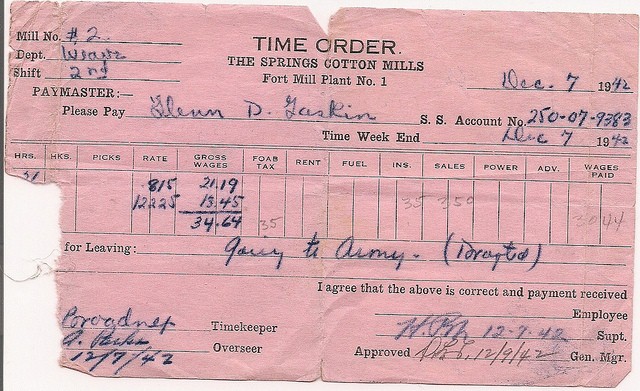
    Time order pink payroll record before leaving for WWII. Glenn Gaskins last payroll recod before entering WWII by wcgaskins59 is licensed under CC BY 2.0

    Maybe it’s time to consider a PEO

    As a professional employer organization, or PEO, our services and comprehensive solutions can provide options that will help effectively manage your payroll needs for you. Think about the time you will save by streamlining your system. 

    GMS’s payroll services include:

    • Full-service, Internet-based payroll processing
    • Payroll tax payment & filing
    • Time keeping systems
    • Workers comp calculations & filing
    • Electronic new hire reporting
    • Online payroll services available 24/7

    Read more about our what our team of payroll experts can provide for your payroll services

    Still have questions about our payroll services or how working with a PEO can save you money? We thought you might, so we added a Payroll Services FAQ section.

    Still not convinced? You don’t have to take our word for it, you can read the testimonials about our payroll & tax services

    What are your top payroll frustrations? Find yourself wishing you could spend your time at work doing other things than payroll administration? Let us know in the comments below.

  • The end of the year is an extremely busy time for most business owners and your attention is pulled from managing one task to the next. One of the most important responsibilities business owners face – and one of the most stressful to manage – is payroll tax management.

    Let’s take a minute to review two major tax obligations that are of critical importance as the calendar year comes to a close.

    Prior to the last payroll of the calendar year

    Verify employee data: Accuracy is critical when preparing your payroll taxes. Confirm all active and terminated employee data is correct, especially his or her social security number. Check to ensure all wage figures, benefits, sick time and vacation time has been accurately reported. 

    Check the wage, tax and benefits information: Ensure special tax information has been collected and correct withholdings have been made for taxable fringe benefits like third-party sick pay, tips, bonuses and any non-cash payments.

    Check for special considerations: Schedule any payments for bonuses, track and confirm that all checks are accounted for in the system. Have your employees complete a new Form W-4 if their situation has changed. Now is also a good time to restock your payroll supplies like blank checks, payroll forms and blank W-2. 

    Prior to the first payroll of the next calendar year

    Verify employee data: Correct any discrepancies including a missing or incorrect mailing address or social security number. Ensure any employees who are no longer with the company have been removed from the database. 

    Check the wage, tax and benefits information: Verify the new state tax rates for disability insurance, unemployment insurance and the taxable wage limit. Compare your payroll register totals to form W-3 totals and verify if the Earned Income Credit (EIC) coding has been submitted correctly.

    Check for special considerations: Ensure the new year’s month-end close-out dates are accurate and that all necessary management reports are scheduled. Confirm the schedule of pay dates, period end dates and quarterly closing dates. While you check these schedule of dates, make sure they do not fall on any holidays or during weekends and make any adjustments as needed.

    Tax management can be time consuming and complicated. But utilizing automated payroll management services can eliminate some of your burden and can help reduce the time you spend generating the reports you need for tax filing. 

    If you find yourself facing end-of-year payroll challenges, understand that you don’t have to face it alone. Turning to a PEO like GMS – which offers online, 24/7 automated payroll management support, can reduce your payroll burden and save you time and money you would have otherwise spent trying to remain compliant with various (potentially confusing) tax laws.

  • According to a recent article in Bloomberg’s Business News, HR departments are going to become increasingly busy over the next 12 to 18 months.  Why?  Because of a recent memorandum that was issued by the White House to the Department of Labor to “modernize and streamline overtime regulations and make more workers eligible under federal law.”

    At the base of this memo is the administration’s desire to transform employees exempt from overtime hours (salaried employees mostly) into non-exempt employees.  This will have enormous financial repercussions on businesses everywhere.  If a salaried manager is working 50-60 hours/week and suddenly becomes a non-exempt employee, one of two things will have to happen.  The employer will have to either cut that employee’s hours to save money (making him/her less productive) or will have to swallow the increased costs associated with more overtime.  A third option would be to hire additional help, potentially adding additional employee-related costs.

    Unlike the initial rules for the Affordable Care Act, there is no exemption based on a company’s size.  This could create extra pressure on small businesses.  Not only would there be the cost of additional overtime, but there would also be the additional costs associated with the auditing employers will have to undertake to make sure they’re compliant with the new regulations.

    Of course, larger employers already have many of the mechanisms in place to take on this added regulatory burden.  What about small businesses?  Where can they go for help?  

    You guessed it. GMS. Give us a call at 330-659-0100 or contact us online to learn more.


  • It’s always good to research your options before making a business decision. The questions may differ depending on the industry your company is in, but payroll plays a factor in every business, and it sure isn’t cheap. 

    Statistics show that it costs small- to mid-size companies an average of $2,000 per employee per year to handle payroll. Even if you’re a small- or mid-size company, a Professional Employer Organization like Group Management Services may be a good fit to help streamline your payroll needs.

    Of course, working with a PEO is a big decision, so you’ll want to find out what they can offer your business. Here are some ways to find out if a PEO is good fit to handle your payroll.

    Payroll services from a professional employment organization.

    Determine Your Payroll Needs

    One big reason why businesses struggle to make their HR process both efficient and cost-effective is because many people aren’t trained to handle things like payroll or employee benefits. GMS is, and we can offer you several services to help, including:

    • Web-based software

    • Simplified payroll management

    • Payroll tax administration

    • Management of tax records

    • Simplified deduction tracking

    If you’re losing time and money trying to handle payroll, it may be time to consider working with a PEO.

    Ask Questions

    Don’t be afraid to see if a PEO can match your business needs. Want to find out how your accountant would play into a partnership with GMS? Wondering about time-keeping systems? Worried about account accessibility? These are all questions that may make a difference in your PEO decision.

    We are happy to answer any questions you may have when it comes to how a PEO can impact your payroll. In fact, some may even be answered in our Payroll FAQs.

    Learn More

    Working with a PEO is an important decision for your business. Even if you’re a small- or mid-sized company, GMS can provide you with top-quality payroll services. 

    Want to learn more? Find out how GMS meets your needs and get a quote today if you think a PEO is the way to go.

  • It’s expensive to pay employees, and I’m not just talking about salaries and benefits. 

    The payroll process is pricier than many business owners realize. It costs an average of $2,000 per employee per year for a small or mid-sized company to handle payroll. In addition, up to 40 percent of businesses in the United States are given an average of $845 in IRS penalties each year.

    These costs add up and can really hurt a company’s cashflow. We’ve already discussed how loss prevention and cost containment can help your business, but a professional employer organization (PEO) can also save you money and time by handling your payroll.

    Payroll costs you more than just your employees wages.

    Preventing Penalties

    You probably didn’t go to school to be an HR professional, so you shouldn’t be expected to understand all of the payroll penalty risks you face each day. But the people who work for PEOs are experienced HR professionals who can make your business simpler, safer, and stronger.

    For example, many PEOs assign a team of HR experts to your account. These professionals will help manage tax records and the storage of necessary payroll documentation, reducing your responsibility and liability in the process. 

    Saving Time

    Many PEOs like Group Management Services also provide you and your employees with anytime, anywhere access to tax and payroll information. Plus, you can realize efficiencies in tracking paid time off and in direct-depositing paychecks that you never thought possible when you did it on your own.

    Yes, you’re still involved in the payroll process; PEOs just make it much faster and easier.

    Making Payroll Easy

    Saving money is great. It’s even better when you can cut costs while streamlining a part of your business. Contact us today if you have any questions about payroll.

  • When you own a small business, you don’t always have the personnel to handle your HR functions, which can leave you having to take charge. Unfortunately, these extra duties can end up hurting your business.

    Having to handle things like payroll takes time, which could be used to help grow your business. Even more, handling your own payroll can end up costing your business money and putting more stress on yourself.

    Contact Group Management Services about how a PEO may be able to save you time and money.

    Extra Costs for Small Businesses

    Payroll is a pricey process, especially when you haven’t been trained to handle it. Some costs that affect small businesses include:

    • An average payroll tax penalty of $845 each year
    • Spending an average of $2,000 per employee per year to handle payroll
    • Hidden costs that can account for over half of the cost of administering HR programs

    While you may not be trained in the ways of payroll and HR, the people who work for Professional Employer Organizations are trained. In turn, they may be able to help you prevent penalties and save money.

    Extra Stress for Small Businesses

    Being a small business owner often means feeling like you have to have a hand in everything. Nearly half of all small business owners fill at least five roles for their company, which can include trying to handle HR responsibilities. This juggling act of roles can take a major toll in your schedule.

    40 percent of small business owners ended up taking less vacation time in order to keep up with taxes and IRS regulations. In addition, 72 percent of small business owners work longer days and spend time dealing with work on weekends due to the time constrictions caused by trying to manage various HR programs.

    The PEO Solution

    Instead of acting as a jack-of-all-trades and having no free time to yourself, a PEO may be able to help you free up your schedule and save money in the process. Contact us today to see how partnering with a Professional Employer Organization can help you and your business.

  • A couple of weeks ago, prefaced by an op-ed piece written by President Obama, the Department of Labor issued new directives on overtime rules. As with most government regulations, however good the intention, the result on small business owners will be a creation of “additional costs and record-keeping headaches” according to the National Federation of Independent Business (NFIB).

    Find out how the Department of Labor’s new overtime rules may affect you.

    What the New Overtime Rules Mean for You

    At issue are exempt vs. non-exempt employees and the potential costs that will be created for small business owners. Under the old rules, any manager working over 40 hours were exempt from overtime pay as long as they earned more than $23,660 per year. Under the new rules, that threshold has been raised to $50,440, a 113% increase.

    While this may seem like a small and just issue, the ramifications are massive. In addition to the additional record-keeping now tied to tracking overtime hours for more employees, this will also have an impact on a small business owner’s profitability. Those who are already working on thin margins now have to factor in additional costs should their managers work more than 40 hours a week. Many of these people were given these positions and titles to help the employer control their costs. Under this scenario, managers can leave early without impact, but can benefit by working longer hours. One of the potential side effects will be the elimination of more salaried people.

    What this will also potentially do is limit promotion and managerial opportunities for lower income workers, the opposite effect of what the people supporting these laws were hoping for.

    Learn More from the Experts

    Are you not sure how these rules impact you? Do you have exempt and non-exempt employees and thought you had all of this figured out? If you don’t know or are unsure where to go to get answers, maybe a Professional Employment Organization can help. Contact us today to find out more.

  • Direct deposit helps to make payday convenient. More than 60 percent of business had switched over to direct deposit as of 2014 and the number has only grown since. If you still haven’t made the move to direct deposit, here’s how it would be a good move for you and your employees.

    Image of a paycheck. Learn how direct deposit services can beneift you and your employees.

    How Direct Deposit Benefits Your Business

    Paper adds up. The cost of a single check may not be much, but having to pay every employee of your company at every pay period can lead to a lot of checks being passed out. Direct deposit is paperless, helping your company go green and saving you from having to order extra checks every other month.

    Not only is filling out checks an extra cost, it can also eat up extra time. Instead of having to fill out checks all the time, direct deposit automates that process. Now you don’t have to stress out over getting everyone paid on time; direct deposit will do that for you. 

    How Direct Deposit Benefits Your Employees

    You won’t be the only person that’s happy about switching to direct deposit. Your employees will be able to benefit from the convenience of direct deposit as well.

    With direct deposit, employees won’t have to rely on their employers to hand them a check every pay period. Instead, their check will appear directly into the account of their choice come payment day without ever having to make an extra trip to the bank. Plus, if they happen to miss work on a payday, they won’t have to badger their employer about it the next time they’re at work.

    Switch to Direct Deposit

    Want to make the move toward a more convenient payday? Group Management Services offers expert payroll administration services for businesses looking for direct deposit and other payroll strategies. Contact us today to learn more about how GMS can make your payroll and HR functions more convenient.

  • Non-compliance can cost businesses a lot of money. If you’ve read our posts before, you’ll know that the benefits of staying compliant are things that we’ve harped on before, but it’s worth repeating, especially when small business owners pay billions of dollars each year in payroll tax penalties. It’s especially true when it comes to something as problematic as multi-state payroll compliance.

    The problem with multi-state payroll compliance is that the rules you followed for your home state may not be the same as the other states where you do business. Each state has different payroll standards, meaning that you may not be nearly as compliant as you thought you were.

    Potential Multi-State Payroll Compliance Issues to Consider

    It can already be tricky to keep track of compliance needs, but adding multiple state locations just amplifies the issue. A few such areas of concern include:

    • Minimum wage
    • Income tax withholding
    • Leaves of absence regulations
    • Common ownership concerns
    • Workers Comp regulations

    We’ll use minimum wage as an example of just how quickly multi-state considerations can get out of hand. Let’s say that you’re a business based in Ohio that hires a lot of employees at minimum wage. If you have an operation in California, you’re going to be expected to pay California’s minimum wage of $10.50 an hour instead of Ohio’s $8.15 as of 2017, even if you’re mainly an Ohio-based business.

    While that may seem simple enough, there’s more. Twenty states increased their minimum wage rates at the beginning of this year. Also, you may not know that there are some cities and counties that observe different minimum wages than their state’s standard. For example, Cupertino, Calif. follows a $12 minimum wage as of Jan. 1, 2017, and they’re not alone. As of March 9, 2017, the U.C. Berkeley Labor Center lists 41 counties and cities across the country that observe a different minimum wage than the rest of their respective states.

    There are also other considerations than just the minimum wage, such as overtime pay rates. According to the Department of Labor, Minnesota’s basic minimum rate changes depending on whether your enterprise has annual receipts of more than or less than $500,000. While premium pay after designated hours kicks in after a 40-hour work week, it doesn’t kick in until after 46 hours in Kansas. Each state has their own specific differences that can create a huge problem for businesses who just based their payroll compliance on their home state.

    Avoid Payroll Compliance Issues Across Multiple States

    As you can tell, keeping track of payroll compliance across multiple states can be extremely complicated. It’s critical that you notify your payroll team about work situations in different states as soon as you can. That way whoever handles your payroll tax management can get a head start so that you can avoid costly non-compliance issues.

    If you’re a small business owner, there’s a chance that payroll compliance responsibilities fall on your shoulders, or on someone else who isn’t necessarily trained to handle payroll. If the thought of managing multi-state payroll compliance seems too intimidating, we’re happy to help.

    As a Professional Employer Organization, we have the experts you need for payroll tax management. Contact us today to talk with one of our experts about how multi-state compliance issues may affect your business and how we can help you stay compliant.