2025 W-2 Forms are now available in your GMS Connect employee portal here.

  • Human resources are one of the most important components of any small business. However, the responsibilities often fall to the owner or an executive, as many small businesses don’t have the capacity for a designated HR department or full-time employee. Often, managing these HR functions in-house creates many challenges. 

    Small businesses find it helpful to outsource human resource management.

    Small Business HR Challenges

    When you devote so much time to growing your business and improving your products and services, how are you supposed to find the resources to manage HR? From recruitment and retention to payroll and benefits, it’s important that HR doesn’t fall by the wayside in a small business. Deficiencies in any of these areas could result in:

    • Non-compliance fines
    • Lack of talented employees
    • Inefficiencies that slow down your production cycle

    Below, we identified some of the most common HR challenges for small businesses and how you can overcome them.

    Hiring process

    Hiring new employees is a major time and financial commitment for a small business. When job ads and interviews are improperly handled, the recruitment process can quickly become a time-consuming headache. 

    For one, it takes an average of 23 days to find the right candidate, according to Glassdoor, taking time away from other important projects. For more technical positions, it can take a lot longer. On top of that, poor job descriptions can attract non-qualified applicants, eating away even more time to manually sift through each resume.

    A hurried interview process or failing to ask the right questions can then result in bad hires, which can cost nearly $15,000 according to CareerBuilder. While many small businesses rely on referrals when it comes to hiring, interviews need to be consistent and conducted in a way that attracts quality talent and provides a clear path toward making a job offer.

    Employee training and safety

    Once employees are hired, having HR resources can be a great asset during training to prevent costly errors and even injuries from occurring. However, many small businesses simply don’t have the time to properly train new hires, which could affect workplace safety.

    According to the National Safety Council, a worker is injured on the job every 7 seconds, with 25 percent of these injuries caused by contact with objects and equipment. Proper training can help prevent workplace injuries like sprains, strains, cuts, lacerations, and punctures as well as promote morale and retention.

    Employee handbook

    Along with poor training, new employees may look to the employee handbook to gain a better understanding of the work environment and job expectations. When was the last time you updated your handbook? An outdated employee handbook can cause miscommunication and even legal issues for a small business. Employee handbooks should be updated at least annually to reflect the ever-changing employment laws and regulations.

    Payroll

    For small businesses, managing payroll and filing taxes can be a time-consuming and challenging task. Small and mid-sized companies spend an average of $2,000 per employee each year to handle payroll, according to PricewaterhouseCoopers. Proper bookkeeping and tax filing may be a hassle, but they play an integral role in the success of your business when it comes to avoiding compliance issues. The IRS found that 40 percent of small businesses incur an average of $845 in penalties each year, which can be a huge financial burden.

    Employee time tracking

    Depending on where you live, you’ll need to comply with local, state, and federal laws regarding vacation, paid leave, breaks, and overtime for your employees. Without a solid time tracking system in place, it can be difficult to ensure your employees are being paid fairly. Utilizing an online platform can help save time and energy for both small business owners and their employees.

    Employee benefits

    In order to attract and retain top talent, it’s important for small businesses to include quality benefits in their employees’ compensation packages. Employees want comprehensive benefits that include everything from health insurance to retirement plans to supplemental insurance. However, many small businesses find that it can be very expensive and time-consuming to purchase and manage these benefits on their own, compared to the buying power of group benefits.

    Employee compliance

    Small businesses must adhere to federal regulations, and failure to comply is common and costly. Perhaps the most common compliance issue for small businesses is employee misclassification. According to the U.S. Department of Labor (DOL), up to 30 percent of audited businesses had misclassified employees. Many misclassify workers as contractors in error, so it’s important to know the difference. While the consequences vary depending on whether the DOL and IRS deem the misclassification intentional or unintentional, it can be a costly mistake. 

    Other laws include the Fair Labor Standards Act (FLSA), Equal Pay Act, and Americans with Disabilities Act (ADA), to name a few. It’s important to stay educated on these federal regulations in order to stay compliant.

    Conflict resolution

    When growing a business, there is a potential for conflict in the workplace, and ignoring it can cost time and money. A study by professional training and coaching company CPP, Inc. found that 85 percent of employees experience conflict in the workplace. Workplace conflict wastes nearly three hours per week, costing billions in paid hours. Not having an HR resource to properly handle conflict resolution will only take up more time and money in addition to dampening employee morale and retention rates.

    Employee retention

    When HR management issues aren’t handled properly, it can be difficult for small businesses to retain quality employees. According to the Society for Human Resource Management (SHRM), retention is a growing problem for many, with the average turnover rate sitting at an unhealthy 18 percent. Running the gamut from bad hires to insufficient benefits to conflict issues, employees are less likely to stay with companies that don’t take initiative when it comes to HR management.

    Your HR Solution

    Between recruiting and retaining employees to managing employee performance, there are many challenges small businesses face when it comes to the responsibilities of HR management. Outsourcing HR through a professional employer organization (PEO) like Group Management Services can help small businesses save time and money, while allowing you to focus on growing your business. 

    GMS provides comprehensive HR services, including payroll administration, risk management, employee benefits, and more. Additionally, GMS can perform HR audits to help your business improve HR functions in a fraction of the time. Contact GMS today to see how we can help you cover these challenges in human resource management, so you can focus on your core business.


  • Entering through the glass doors of a corporate building, I expected nothing less than a dull monotony. However, I discovered upon closer inspection that instead of a boring office building, I had entered a comfortable, healthy, work environment. Rather than simply shadowing my dad on “take your kid to work day,” I took this as an opportunity to interview the employees of GMS on their thoughts about their work environment.

    The response I received was overwhelmingly positive. One might expect Mike Kahoe, president of GMS, to speak highly of the company, calling it a “friendly, cheerful environment.” But what one might not always expect is for the rest of GMS to speak of it just as highly.

    A group of employees eating with one employee's daughter during Take Your Kids to Work Day.

    For example, I interviewed Director of Wellness Julie James. To paraphrase, she described the environment as a healthy, friendly place with countless amenities to allow people to feel less stressed and more disconnected from electronics in such a tech-heavy industry. These amenities include, but are not limited to a yoga room, a healthy kitchen, and a cafeteria that allows for socialization with fellow coworkers. 

    Others shared this sentiment, including Beth Kohmann, vice president of benefits. She described the culture at GMS as one of openness towards coworkers, where people view their colleagues as friends. She went on to describe the environment as being very fluid, meaning that while employees are obviously held accountable for their job, they are also free to socialize and move about the office and build these relationships. 

    Jumping off of that, one of the things I noticed was how friendly everyone was to someone younger than them. I felt welcomed and like I could carry a conversation with the people there without having them talk down to me because of my age. It felt good.

    Tim Austin, vice president of sales, stated that the company was not only friendly, but also lively and energetic. I experienced this as well, seeing that among all the employees there, I was not significantly younger than a portion of their workforce. 

    There seemed to be a lot of commonalities in my conversations with employees across the board. It came off as a very supportive place where everyone worked to help each other succeed. Going along with this, Will Hart, vice president of tax, sees GMS as a place where the employees are very team oriented. I can’t help but agree with this, given the fact that throughout my day there I noticed a strong team dynamic amongst all the employees I met. 

    All in all, the response I received from the employees of GMS was an overwhelmingly positive one. Throughout all of my conversations, not one person had a single bad thing to say about the company. I couldn’t blame them for speaking so highly of their environment. In my experience there, the atmosphere was incredibly friendly and welcoming to someone who was so much younger than those around me.

    No longer were the glass doors an entrance to a dreadfully dull monotony. They had become doors to a world of ambition. They were an entrance to a place of friendliness and comradery – a passage towards optimism and opportunity.  

    Want to join the GMS family? Check out our current openings and apply to GMS today!

  • Are you prepared for an OSHA inspector to arrive at your door? OSHA performed roughly 72,000 federal and state plan inspections in 2018 alone and all it takes to earn an unexpected visit from an inspector is a complaint from an employee or operating in a high-hazard industry.

    Nobody plans to have an OSHA inspection occur at their place of business, but it’s important to act accordingly if it does. Here’s what you should and shouldn’t do before, during, and after an OSHA inspection to protect your business.

    An OSHA inspector reviewing the worksite of a small business. 

    Do: Invest in Workplace Safety

    One of the most important steps you can take should happen well before an OSHA inspector arrives. Investing in workplace safety benefits your business in two big ways. First, a culture of safety with set policies, procedures, drug tests, and other measures can minimize injury risks and help protect your workforce. Second, these policies, along with proper reporting for any incidents, will show OSHA that you’ve done your part to make your job site a safe place. In terms of what you do to protect your business and potentially lower your workers’ compensation claims, check out our list of dos and don’ts for workplace safety.

    Don’t: Assume Your Existing Policies are Fine After Years of Inaction

    If you already have an employee handbook with various workplace safety policies in place, that’s great. If it’s been a while since you’ve reviewed those policies, they may not be so helpful after all.

    There’s so much that changes over time. Between new legal requirements, the growth of your business, and other factors, what may have been a solid set of safety policies at one point could be outdated. A regular review of your policies with a risk management expert can help you keep your handbook updated and your business in a good spot in case an OSHA inspector ever stops by for a visit.

    Do: Be Welcoming and Professional if An Inspector Arrives

    The arrival of an OSHA inspector isn’t good news, but it’s important to be civil toward whoever arrives to scope out your space. Any attempts to prevent the inspector from entering can be perceived as obstruction, which has some major consequences including criminal penalties. Instead, welcome the inspector in and be friendly and honest. Demonstrating good faith can go a long way toward the reduction of any resulting penalties, so don’t be afraid to work with the inspector and make the process a lot quicker and easier.

    Don’t: Provide Information Unasked

    Just because you should be courteous and honest doesn’t mean you need to tell the inspector everything right away. It’s important to be honest when an inspector asks questions, but as the Society for Human Resource Management suggests, “Once you’ve answered a question, stop talking.” As long as you succinctly and honestly answer the inspector’s questions, you don’t have to volunteer any other information unless it’s requested.

    Do: Gather Information

    The inspector isn’t the only person allowed to ask questions. When the inspector first arrives and holds an opening conference for the visit, ask to see some credentials and get some details about what is being inspected and the nature of the visit. The inspection can also provide you with ways that can potentially improve the overall safety of your workplace. Feel free to ask the inspector if there are ways that you can improve any existing hazards – you never know if he or she may have a couple inexpensive solutions observed from other worksites.

    Don’t: Leave Inspector Alone

    Once an inspector is on your premises, it’s important to make sure that someone from your business always tags along. Not only will this person be able to answer any questions and assist with the inspection process, he or she can document the same information as the inspector. If the inspector takes pictures of something, do the same. If he or she takes down measurements, record that information. This information may not be readily available to you, so saving these details can help in case you need to defend your business against a citation.

    Do: Consider Your Options After the Inspection

    It can take months for OSHA to issue a citation. If your business is cited, you’ll want to address the hazards noted in the citation. You’ll also need to decide if you want to contest any violations (or abatement requirements), aim for early settlement, or go for voluntary compliance. The right path is heavily dependent on the specifics of your case, so you’ll want to talk to experts to see which course of action makes the most sense.

    Whether you’re concerned about potential OSHA inspections or want to take a proactive approach to workplace safety, GMS can help. As a Professional Employer Organization, we have the experts it takes to help you create a culture of safety and protect your business against safety violations, lost work hours, and costly fines and workers’ compensation rates. Contact GMS today about risk management strategies or any of our other HR management services.

  • Safety is one area business owners shouldn’t overlook. According to the National Safety Council, a worker is injured on the job every seven seconds. It’s essential to make sure your employees are given the tools to succeed, while also ensuring you have created a culture of safety to minimize any risks their daily activities may carry. 

    Workplace safety programs are designed to give you the tools necessary to develop and manage an effective safety culture that will not only help reduce work-related injuries and workers’ compensation costs but assist in helping you meet federal regulatory requirements as well. Here’s what you need to know about implementing a successful workplace safety program. 

     Manager checking fire safety system.

    Create a Culture of Safety

    Before you create your workplace safety program, it’s important to understand what it takes to create a culture of safety in your organization. Here are the four keys to an effective safety culture.

    Facility Audit

    Walk the facilities and observe processes and field work to identify the types of hazards employees are exposed to.  For example, you might notice a mezzanine 5’ above another floor with no guardrail system. Or, maybe one of your project managers stops to check on the progress of your electricians and discovers they are working on live circuits without locking out breakers. 

    Hazard Control

    Once you identify the different hazards your employees are exposed to, you’ll need to find a way to control them. The different types of hazard control include:

    • Elimination
    • Substitution
    • Engineering
    • Administrative

    When assessing the different hazards in your workplace, discuss which would be the best method for combating the issue. For example, if you have a large hole in the middle of your job site, you could:

    • Elimination: Fill the hole in.
    • Substitution: Issue fall protection for employees.
    • Engineering: Add a guard rail around the hole.
    • Administrative: Close that area of work down.

    Employee Training

    Now that you have identified and controlled the risks, it’s important to train your employees on the measures you’ve taken to protect them and what role they must take in their own safety. For example, if you purchased fall protection equipment, you must now train employees to know when to use the equipment, the equipment’s capabilities, how to utilize the equipment safely, and how to inspect the equipment correctly.

    Documentation

    It’s critical to keep a record of all types of safety data, as much of it is required by law. You’ll need to keep documentation of:

    • OSHA 300 logs
    • Safety data sheets
    • Safety training and tool box training sign-in sheets

    You’ll also want to track your progress and document your steps by keeping your job hazard analysis and standard operating procedures.

    Document Programs

    Companies with 10 or more employees must have, at very least, these four safety programs in place: Health and Safety Manual, Emergency Response Plans, Fire Prevention Plans, and a Hazardous Communications Program. After these, it may be required that you have more written programs based on the specific hazards your employees are exposed to, such as fall protection programs, respiratory protection programs, and forklift operation programs.

    Implement Your Workplace Safety Plan

    Just having the documentation on hand doesn’t keep your employees safe. Use your programs to develop a training regimen. Owners are required to train their employees, but sometimes struggle to find content. Your written health and safety documentation can provide you with a unique, job-specific training curriculum. Your training sessions should be based on prioritizing your specific hazards from those with the largest potential for catastrophic outcomes to those with the least and then creating a yearly training schedule tackling the biggest hazards first. 

    Obtain Employee Buy-In

    The hardest part of achieving an effective safety culture is obtaining employee buy-in. It’s important to let your employees know that you care about them and want them to go home and enjoy their free time, family, and friends in the healthiest way possible. As an owner or production manager, you need to convey the message that safety will never take a backseat to production or service. Look to your frontline supervisors to lead by example in following your workplace safety plan. Give them the authority to enforce the written discipline policy, but more importantly give them the influence and knowledge to implement your safety program daily, so they are familiar with the hazards, controls, and regulatory requirements of each job, exemplify the standard, and engage employees in the process.

    Outsource Your Risk Management Services

    Many small business owners struggle to stay ahead of the risks associated with workers’ compensation and workplace hazards. Group Management Services (GMS) is dedicated to reducing your risk through onsite consulting, jobsite inspections, accident and injury investigations, training, and education.

    As you think about ways to keep your workplace safe, you might also want to think about other ways you can make your workplace simpler, safer, and stronger. GMS offers payroll, risk management, and human resources services to help keep your business running smoothly all through the year. Contact GMS today to talk with one of our experts about how you can ensure workplace safety at your organization.

  • I spent this summer working at Group Management Services as their marketing intern, and I can surely say this experience has exceeded all my expectations. As I wrap up my 11-week program at GMS, the feelings have grown from scared and nervous to bittersweet and confident. Even though this is my last week at GMS, I know I am going back to school with more knowledge and new relationships because of the people and resources at GMS. 

    I say “started from the bottom now we’re here” because coming in as a 19-year-old intern, I was anxious about how I would adapt to the professional world. I questioned if my manager would be able to trust me to get my work done – and I even thought I may not fit in – but I learned quickly that I am not alone in this process and GMS wants to do everything to make you successful in your career. 

    I could write a whole book on everything I did this summer, but I will leave you with the biggest takeaways I have learned in my time at GMS.

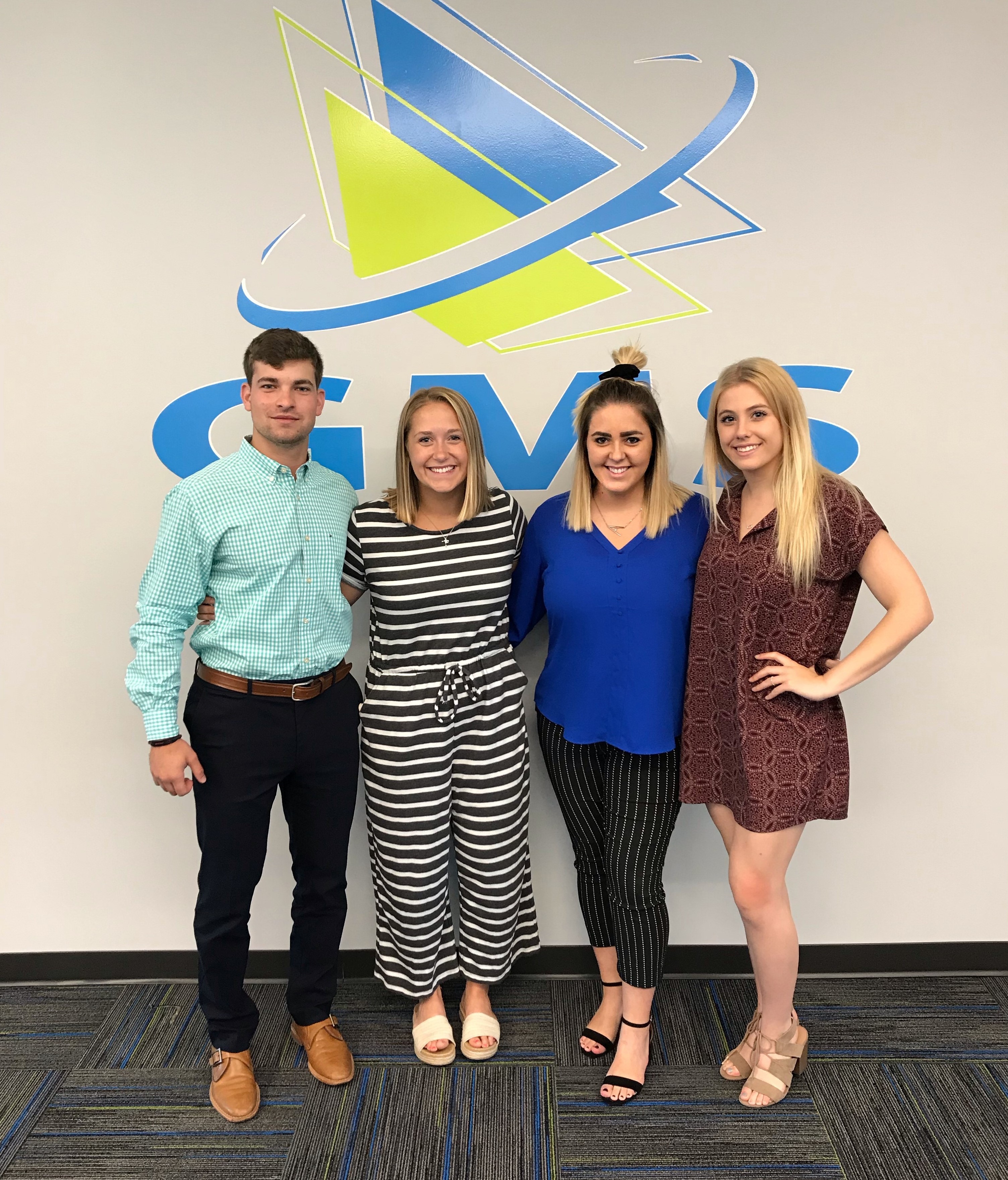
    Emily Brock with her fellow GMS interns.

    Relationships Set the Foundation 

    Throughout this internship, I was able to meet people with different personalities and I am able to value the relationships I made with each one them. I never would have thought the girl I sat next to everyday would become one of my best friends, my manager would be like my big brother, and the two girls sitting across from me would turn out to be my workout buddies. Not only have I made friendships with my co-workers, but I know I can go to them for anything. The way people go out of their way to connect with you, just in passing through the office, sets the foundations for meaningful relationships that develop over your time here. I was so lucky to call GMS my second home for the summer. 

    Be True and Be You 

    The employees at this company are what makes GMS such a fun workplace. From people in benefits to payroll and client services, everyone is completely themselves and it helped me be open and honest with the people I worked with. I was lucky enough to take on assignments and add “my spin” on those projects. When I would talk to people, it was easy to give my ideas because I knew they valued what I was saying and believed in my work. I did not have to pretend to be someone I am not, and it made coming to work easy and enjoyable. 

    Work Hard 

    Something I really value at GMS is how hard everyone works and believes in their job. To see people put so much effort into what they are doing sets an infectious example for what I want in my future. It reminds me a lot of practicing for basketball: “You want to be the first one in the gym and the last one to leave the gym.” Everyone at GMS is disciplined in their work and want to succeed not only for themselves and their family, but to help grow the company. Coming into work with this mindset is only preparing me for the best and I can’t thank GMS enough for helping me implement this motto. 

    Don’t Be Afraid to Ask Questions but Be Confident in Your Work 

    I believe my biggest weakness is not being confident enough in myself and I question a lot because I want everything to be perfect. Over 11 weeks, I learned that I have good ideas that can benefit the company and I learned to believe in myself more. During my first couple of projects, I would ask a lot of questions, but I realized my manager trusts me and believes in me to produce the best work. I would ask questions to him and I learned from him, but I also presented ideas in a confident manner. Having an open line of communication and the ability to ask for pointers is an important part in building a strong relationship. 

    You Are Way More Important Than You Think 

    The most important takeaway I learned this summer working at GMS is that I am an asset to this company and my work I completed over the summer matters. It felt amazing when people came to me saying “The video you made is awesome!” or “Hey, the social media pages look great!” These complements reminded me that my co-workers appreciate me and notice my projects. People would come to me for advice and I know they trusted me and believed in what I was telling them. I think it shows the kind of people that work at GMS because they care for “their second family” so much. 

    The biggest advice I could give to someone entering an internship right now is to step outside your comfort zone, be bold, and don’t be scared to show your skills because it is only going to make you stronger and more successful. Make mistakes and learn from them, and always reflect on your experience and the opportunities you are given. 

    At the end of the day, I can’t thank GMS enough for everything I have learned over the past 11 weeks as an intern. This was by far my favorite thing I did this summer and I am so happy I made the decision to be their marketing intern. Special shout-out to Matt Schoolcraft for keeping up with me all summer and everyone else who was there for me! You guys are amazing and I’m so lucky to call you friends! This internship has been nothing but amazing and I look forward to taking the skills I learned here with me and my future.

    Want to join the GMS family? Check out our current openings and apply to GMS today!

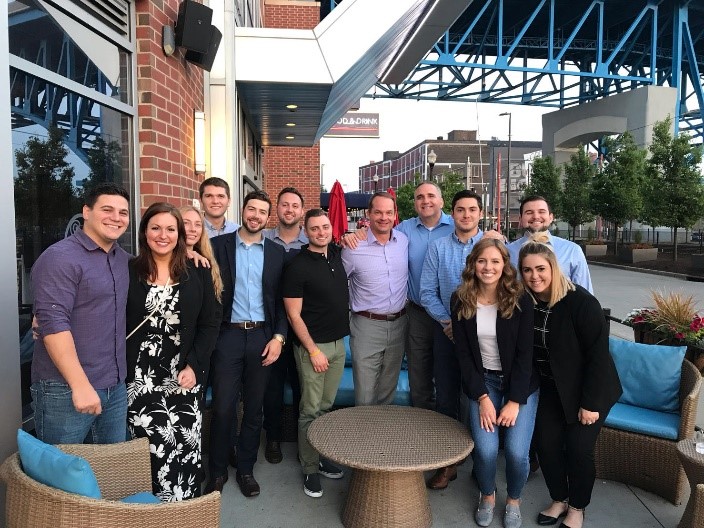
    Emily Brock at a Cleveland Indians game with her fellow GMS interns.

  • You might debate between internship opportunities.  There’s a chance that you’re intimidated to even apply for an internship. You most likely feel scared to start this kind of experience. These are all feelings I felt going through this process, along with many more. Just go for it! Take this opportunity and run, you will grow in many ways.

    The GMS team promoting company culture outside of work.

    What to Expect from an Internship at GMS

    The first week at GMS is an adjustment in the best way possible. When you walk in the doors, anyone and everyone will say “Good Morning” and “How was your weekend?” You will feel welcomed instantly whether you know these people or not. Training week was a favorite for me! Going through training with all the new sales representatives was very beneficial and helped me learn so much about GMS. There will be a lot of information thrown at you, so be ready to learn with an open mind and, of course, have fun!

    Throughout the internship experience, you will want to learn everything about this company. There’s a lot, so take one step at a time. Every individual who works at GMS is passionate about what they do, and it is so motivating to be around! Take the time to learn and make friends in your department, as well as other departments – it will benefit you. Something I wish I would’ve told myself before I started is to not be intimidated by success. There are tons of successful people at GMS and at the beginning that can be intimidating, but I promise they are there to help and guide you. 

    Every Monday and Friday morning, I attended meetings with the sales department. These meetings highlight everyone’s success and will get you pumped up to crush the week. I swear, I sometimes feel like I am at a TED Talk by how motivating they are. 

    Highlights from GMS

    I can talk all day about my favorite things at GMS, but I am going to highlight some of the top experiences. We dedicated an entire week to shadowing all the departments at GMS. This not only taught me what each department does daily, it also helped me connect with a ton of people. Our HQ is a large building, but it became smaller after I shadowed and grew more comfortable. 

    One of my favorite things was going on ride-alongs. This is where you shadow different reps on all kinds of appointments. From first meetings, to proposals, and popping in to see how their clients are doing, you will get to experience all aspects of the sales cycle. Seeing GMS come to life in these meetings is where I learned best. I was able to connect the information I learned in training and shadowing the departments.

    One of my favorite experiences during my internship was the National Sales Conference: GMS Vision, which includes the sales departments from every office across the country. Working with the managers and the VP of sales to help organize this event was so much fun and having all the offices under one roof to learn and grow together is very rewarding.

    Not only will you learn and grow as a professional, but you will have a blast doing it. The culture at GMS is something I have never seen before. You will make great friends and have some fun times! You will laugh so hard and smile so much with these people. If you are wondering if you should hang out with them outside of work, the answer is yes! Go to the lunches, the dinners, the workout classes, the Indians games, the cookouts, and go play a game of cornhole even if you aren’t good.

    Andrea Libal with her fellow GMS interns.

    GMS: A Memorable Experience

    Taking this internship at GMS was one of the best decisions I have ever made. I have grown personally and professionally because of the influential people here. Your manager will become someone you look up to and mess with from time to time. The person you sit next to will become your new best friend. There will be someone that you know you can always laugh with and there will be someone who will straight up tell you the truth. 

    If I can think of one quote to describe this company it’s “work hard, play hard.” Everyone here works their tail off day after day and has some great times together, as family. A lot of the people you meet will have no idea how much they did for you but thank them even if they don’t get it completely. Going back to those initial thoughts and feelings, I talked about at the beginning… don’t be intimidated to apply and don’t fear this kind of experience. If you’re debating between where and what you want to do, I recommend GMS with my entire heart. 

    Thank you, Mike Kahoe, for everything you do. Thank you for creating an amazing company and giving me this opportunity. Another thank you to Dan Flanagan for being the best manager I could’ve asked for and for making me laugh every time you laugh. Finally, a huge thank you to the entire sales department – you all have taught me so much and I thank you for always being there to help me. My internship experience has been nothing but the best and I am grateful for everything this company has given me.

    Want to join the GMS family? Check out our current openings and apply to GMS today!

  • This time last year, I would never dream that I would have an internship my first summer out of college. I barely knew what the purpose of an internship was. Of course, I saw interns in movies running around getting coffee and such, but I never really thought of it as much more than that.

    GMS intern Sammy Crisalli during her time with the company.

    Joining GMS

    Fast forward to winter break when I was presented with the opportunity to apply at GMS. I went in completely blind, not knowing much about the business or having much insight on sales in general. The position sounded interesting, and I saw it as something that could help further my education.

    Soon after I applied, I received an email for a virtual interview (since I was away at school at University of Kentucky) and I was ecstatic! In all honestly, I had no idea what to expect out of this interview process. I was very nervous, but was pleasantly surprised with how smooth it went and how everyone involved eased my nerves. After interviewing with Melanie Bahr, Kate Carnahan, and Tim Austin, I was more excited than ever for this great opportunity.

    After I was offered the job, I felt as if a weight had been lifted off my shoulders, as I was now set on a job for the summer that would also benefit my college career. 

    A Learning Experience

    I checked out the company website before my first day and looked over the sales manual, but I really had no idea what I would be walking into on my first day of training. I was surprised to walk into a brand-new building for a quickly growing company that would present me with an abundance of knowledge to bring back to school.

    After the first week of sales training, I finally had an understanding of the services GMS offers and how we are able benefit so many companies across the country. GMS is a Professional Employer Organization, providing all levels of human resource administration for small to medium size businesses. I got to see this process put into place while shadowing sales reps on meetings and learning about the day-to-day operations of other departments.

    These were all new concepts to me. I honestly had no idea what human resources really entailed before this summer – I just knew that if I had a problem at work that was who I went to for help. I didn’t know what a worker’s compensation claim was or even what employee benefits really entailed. 

    Growing Through Experience

    While learning all about GMS, office life, and how to be professional, the biggest take away for me is the importance of effective communication. I have been a soft-spoken person my entire life, so I was able to get out of my comfort zone in a very beneficial way. I finally know how to communicate in a professional and confident manner. I was able to develop these skills from shadowing sales reps and making cold calls to business owners regarding the services we offer. 

    Looking back, this was my first exposure to sales, so seeing how passionate all these sales reps are and how they genuinely want to help businesses is incredible to me. They truly believe in the services they provide. Then it was impressive to see how the service works firsthand. The statistics on GMS and the PEO industry as a whole supported my understanding and belief in this company. 
     
    Lastly, the thing I’m probably most impressed with is the culture here and the nature of my job. Every single person at GMS is not just here to get their job done. They are always looking out for one another and their prospects/clients. Everyone was willing to help whenever I needed it and they would take me along with them to have firsthand experiences. This was inspiring and motivated me through my daily tasks, where I saw myself making a difference. It never just felt like busy work, as I saw the benefit of what I was doing every day. 

    A Lasting Impression

    This internship was exactly what I needed to have a head start into the world of business. I feel like I accomplished so much this summer, with everything from cold calls and prospecting to contributing in the organization of the national sales conference. Thank you to everyone who has made this an unforgettable learning experience, while having a lot of fun along the way.
     
  • As a small business owner, a day off from work can be hard to come by. Nevertheless, come election day, flu season, or travel season, your employees will need a resource to turn to in order to know whether or not they have to show up for work. It’s important to include an employee leave policy in your employee handbook, so your employees understand the rules and expectations about the amount of time they’re allowed to be away from work. 

    “There are so many different types of employee leave, and each bucket may require its own policies in the company handbook,” says Beth Milito, senior executive counsel at the National Federation of Independent Business’s (NFIB) Legal Center. 

    When crafting employee leave policies, you should first check the employee leave laws in your state. Employee leave laws govern whether an employer must allow employees to take time off―either paid or unpaid―under a different number of circumstances, such as vacations, sick days, holidays, bereavement, and jury duty. Leave laws also address whether an employer must pay accrued leave to employees upon separation from employment.

     Vacation employee leave.

    Georgia Leave Laws

    In Georgia, vacations, sick days, holidays, bereavement, jury duty, and more are all governed by the state’s leave laws. Here’s what Georgia employers need to know about employee leave laws in their state.

    Vacation leave

    Vacations are nice to take every now and then, but that’s all they are: nice to have. In Georgia, employers are not required to provide employees with paid or unpaid vacation benefits.

    However, many small businesses offer paid time off to stay competitive in recruiting and retaining employees. According to NFIB, 73 percent of small businesses offer PTO to full-time employees. While the number of days offered is typically dependent on an employee’s length of service, the U.S. Bureau of Labor Statistics says many offer an average of 10 days for PTO each year.

    Should you decide to terminate a worker’s employment, or an employee decides to quit, it’s important to establish a clear policy regarding payment for any vacation time left on the table. In Georgia, employers need to establish policies either:

    • Requiring employees be paid for accrued vacation time.
    • Denying employees payment for accrued vacation time.
    • Disqualifying employees from payment of accrued vacation if they are terminated.
    • Disqualifying employees from payment of accrued vacation if they fail to comply with specific requirements, such as giving two weeks’ notice.

    Sick leave

    What happens if an employee feels under the weather? In Georgia, you aren’t required to offer paid or unpaid sick leave. However, like vacation time, many small businesses will offer employees time to recover from an illness. According to NFIB, 56 percent offer paid sick leave, with many offering a week or more.

    Bereavement

    Bereavement leave is time taken by an employee due to the death of another individual, usually a close relative. Georgia leave laws do not require employers to provide employees with bereavement leave or leave to attend funerals. However, NFIB says that nearly nine out of 10 companies offer bereavement leave.

    Holidays

    Small businesses in Georgia are not required to provide paid or unpaid holidays off. However, NFIB data shows that nearly 80 percent of small businesses offer paid time off for holidays. The typical paid holidays include:

    • New Year’s Day
    • Memorial Day
    • Easter
    • Independence Day
    • Labor Day
    • Thanksgiving Day
    • Christmas Day

    Jury duty

    Georgia law makes it illegal to discharge, discipline, or penalize an employee for taking leave for attending a judicial proceeding, including a subpoena, jury duty summons, or other court order. While Georgia doesn’t have any laws specifically requiring you to provide paid leave, the Attorney General is in favor of it.

    Voting leave

    On election days, Georgia leave laws require employers to provide up to two hours of leave for an employee to vote. However, the employee must give reasonable notice and the polls also can’t be open for at least two hours before or after the employee’s shift.

    Georgia business owners aren’t required to pay employees for voting leave. You can also determine the hours an employee may leave their shift to vote.

    Handling Employee Leave

    Leave laws vary by state, so it’s important for employers across the country to be informed when creating employee leave policies. Whether you own a business in Georgia or some other state, it’s important to make sure your employee handbook explains how your business handles employee leave. 

    As a Professional Employer Organization, GMS can help ensure your handbook is updated with the necessary laws and regulations to best protect your business. We’ll save you time and stress by managing key business functions like payroll, benefits administration, and other important services. 

    Contact our Georgia office or one of our many other locations today to talk to one of our experts about how we can help you make your business simpler, safer, and stronger.

  • The first wave of minimum wage increases hit New Jersey employers July 1 after state legislators reached the deal earlier in the year. However, business owners need to prepare themselves for more than just this initial wage boost. Here’s what New Jersey employers need to know about New Jersey’s plan to raise the minimum wage to $15 – and why business owners across the country should pay attention.

    A small business owner accounting for increasing minimum wage.

    Breaking Down New Jersey’s New Minimum Wage Deal

    As of July 1, 2019, the minimum wage in New Jersey is now $10 per hour, but it won’t stay there. The new minimum wage deal instituted regular intervals for wage increases. The current $10 rate is set to increase to $11 starting Jan. 1, 2020. From there, it will go up by $1 every subsequent Jan. 1 until capping out at $15 in 2024.

    That’s not necessarily the end of any potential minimum wage increases, however. After 2024, any additional increases are “tied to the consumer price index for all urban wage earners and clerical workers, or CPI-W,” per NorthJersey.com. These changes would go into effect Jan. 1 of every year after 2024.

    Of course, there’s more to the new deal than just one set of minimum wage rollouts. There are some exceptions where certain types of workers will follow an alternative rollout. These include the following groups:

    Seasonal workers or employees with five or fewer workers

    The minimum wage rate is drawn out for these groups compared to the normal rollout. These types of employees are still currently at $8.85 per hour and follow a modified timeline.

    • $10.30 – Jan. 1, 2020
    • $11.10 – Jan. 1, 2021
    • $11.90 – Jan. 1, 2022
    • $12.70 – Jan. 1, 2023
    • $13.50 – Jan. 1, 2024
    • $14.30 – Jan. 1, 2025
    • $15 – Jan. 1, 2026
    • CPI-W-based increases plus parity to make up any remaining difference between standard minimum wage

    Tipped workers

    The take-home pay for these workers follows the same structure as the normal minimum wage rollout, although the how they’re paid is different. Tipped employees must receive at least minimum wage through the combination of salary and tips. The new rollout updates the salary floor for these workers accordingly:

    • $2.63 – July 1, 2019
    • $3.13 – Jan. 1, 2020
    • $4.13 – Jan. 1, 2021
    • $5.13 – Jan. 1, 2022
    • CPI-W-based increases starting 2025

    Agricultural workers

    Unlike other groups, agricultural workers will cap out at $12.50 before being tied to CPI-W. Like seasonal employees, these workers are still at $8.85 and follow an adjusted timeline

    • $10.30 – Jan. 1, 2020
    • $10.90 – Jan. 1, 2022
    • $11.70 – Jan. 1, 2023
    • $12.50 – Jan. 1, 2024
    • Any further changes depend on future wage raises

    How Employees Can Prepare for Minimum Wage Increases

    When it comes to minimum wage, there’s not much you can do as a business owner except prepare your business for the future. The first step for this is to convert your payroll every time minimum wage increases. If you don’t, the state of New Jersey can dole out fines of up to $1,000 and an “administrative fee equal to not less than 10 percent or more than 25 percent of any payment due to employees.”

    You’ll also need to evaluate how the slate of minimum wage increases affect your employees and what it will do to your profitability. This can mean planning out price adjustments for products and services over the next several years to account for the set wage increases. Meanwhile, you can potentially use the new rates to find better employees if you have the financial wiggle room to do so. Offering a little more than minimum wage may make your business more attractive and give you more interested candidates. From there, you can choose the best employees if you struggle to find good talent.

    Prepare for the Future with Proper HR Management

    The new minimum wage deal is a big change for business owners in New Jersey. However, employers outside of the state should also take notice. New Jersey, along with California and New York, serve as a sort of testing ground for changes like this. If the minimum wage increases do well in New Jersey, other states may look to adopt similar increases as well.

    Whether you own a business in New Jersey or some other state, it’s important to make sure you keep up with current and future legislature. As a Professional Employer Organization, GMS not only helps you stay compliant, we can save you time and stress by managing key business functions like payroll, benefits administration, and other important services.

    Ready to prepare your business for the future? Contact our New York office or one of our many other locations today to talk to one of our experts about how we can help you make your business simpler, safer, and stronger.

  • When you’re thinking of starting a business, your passion is ultimately what drives you to provide the best product or service. The first thing that comes to your head is not about the technology you need for payroll, or how you are going to recruit top talent. Need an employee handbook? “I’ll type something up real quick.” 

    These are just a few of the many human resource topics you can easily put on the backburner without realizing the full scope of responsibilities you now carry as a business owner. As for the future of HR, it’s only getting more crucial for businesses to stay compliant with laws and stay protected.

    Two small business owners responsible for many HR functions, including payroll and taxes. 

    HR Responsibilities for New Business Owners

    The U.S. Small Business Administration puts the followings tasks under human resources:

    • Recruitment and hiring
    • Payroll and benefits
    • Employee retention and compensation
    • Laws and regulations

    Recruiting can be a difficult and frustrating process. Doing it the right way, the first time, will save you time and money to produce the best results down the line. This can result in hiring committed, talented, and loyal employees that will benefit your company and your bottom line. “Where do I even start,” you may ask. A job description and an employee handbook can get the ball rolling, but you must write both correctly to save yourself in the long run. According to HR Dive, 72 percent of hiring managers say they provide clear job descriptions, while only 36 percent of candidates agree.

    Once you have employees, you must have a system for payroll. Again, you may not know where to start. You know how much you want to pay your employees, but now you must log hours, file taxes, and keep up with your own finances. This is where retention and compensation come into play as well. Keeping up with workers’ compensation, healthcare, 401k, and all other benefits go hand in hand with retention and compensation. According to MetLife, 51 percent of employers say using health and wellness benefits to maintain employee loyalty and retain talent will become even more important in the next three to five years.

    Lastly, staying on top of laws and regulations can be overwhelming because of how often they change. Failing to put these new regulations into place can result in legal issues, which is why it is essential to stay on top of them. Dozens of new laws take effect yearly and as an owner, you are responsible for making sure your company is compliant. 

    Set Your Business up for HR Success

    Preparing for the future of HR can be simple with the right resources. Being able to embrace change, technology and the new workforce is essential. Now what can GMS do for you? GMS is a Professional Employer Organization that puts all of your HR responsibilities under one roof for your company. We have the HR experts who will keep your organization up to date with the latest regulations, making sure you and your workforce are protected. 

    GMS has you covered when it comes to areas like payrolltaxhuman resourcesrisk managementbenefits, and healthcare. We help you reduce costs, limit your business risk, and save time and money when it comes to HR administration. Contact GMS to see how we can help manage and benefit your organization!